
Can poor posture really cause back pain? Learn what current evidence says about posture, prolonged sitting, movement, exercise and low back pain—and how physiotherapy can help you manage symptoms and improve movement.
Have you ever been told, “Your back pain is because your posture is bad”?
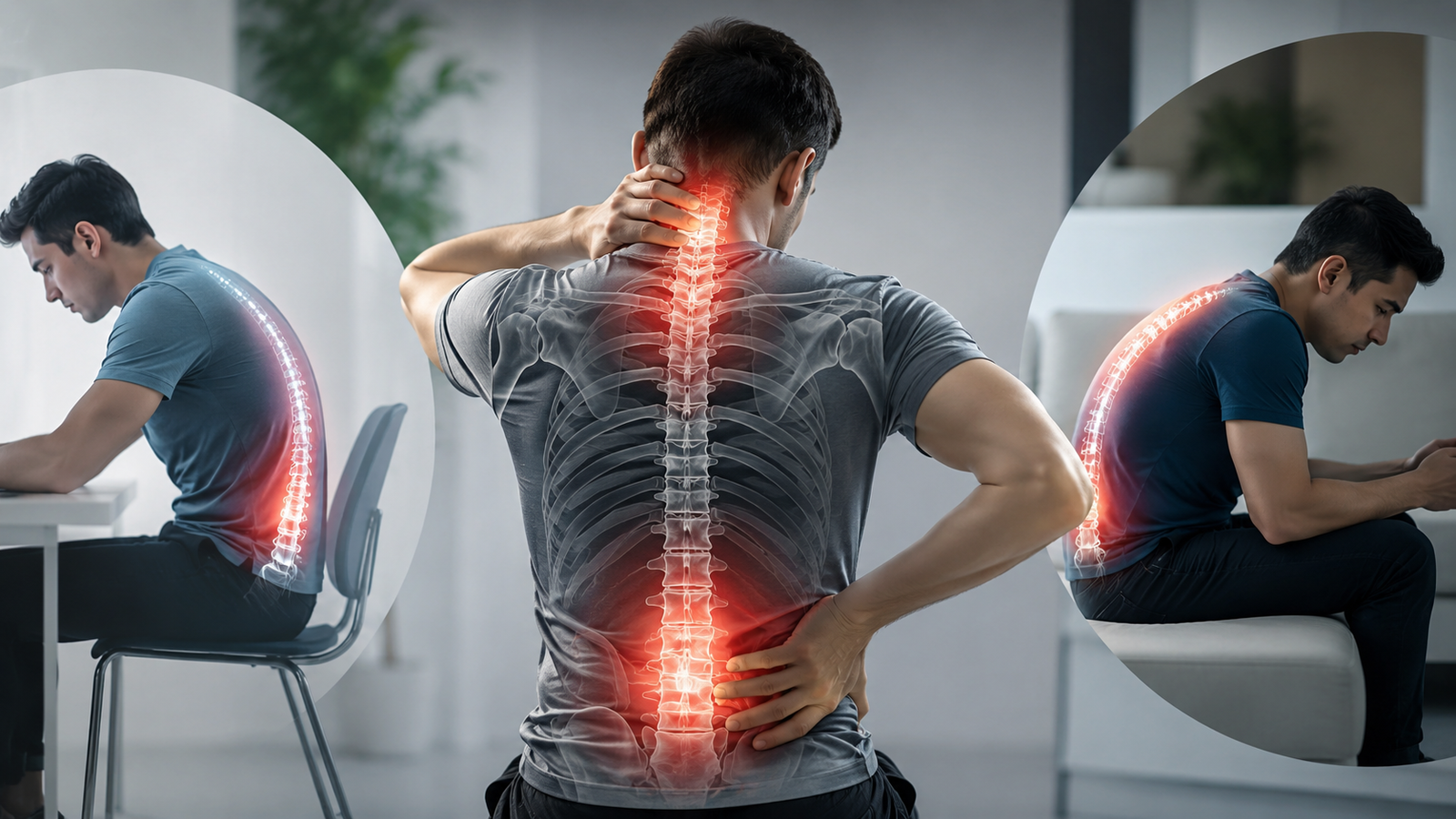
Perhaps you sit for hours at a desk, bend forward while using your phone, sleep in an uncomfortable position, stand with your weight shifted to one side, or spend much of the day sitting in a slouched position.
It is easy to assume that poor posture is directly responsible for back pain. But the relationship between posture and back pain is more complicated than simply saying that one causes the other.
Research suggests that certain postures, prolonged sitting, limited movement and sustained physical positions can be associated with low back pain. However, posture alone does not explain why one person develops back pain while another person with a similar posture remains completely comfortable.
Low back pain is influenced by many factors, including physical activity, muscle capacity, sleep, stress, previous injuries, workload, general health, movement habits and individual sensitivity to pain.
So, can poor posture really cause back pain?
The most accurate answer is: poor or sustained posture may contribute to back pain in some people, but it is rarely the only cause.
Understanding this difference can help you manage back pain more effectively instead of constantly trying to maintain a “perfect” posture.
What Is Considered Poor Posture?
Posture refers to how we position and hold our body while sitting, standing, lying down or moving.
There is no single posture that is perfect for everyone.
Common examples of posture-related habits include:
- Sitting with the trunk continuously slouched forward
- Keeping the head and neck in a forward position for long periods
- Sitting without changing position for several hours
- Standing with most of the body weight on one leg
- Working with the trunk repeatedly bent forward
- Holding the same position during prolonged computer or mobile-phone use
- Poor positioning during lifting or manual work
- Sleeping in a position that aggravates existing symptoms
Importantly, a posture that looks “bad” is not automatically harmful.
The human body is designed to move through many positions. Problems are more likely when a particular position is maintained for a long time, repeatedly performed under high physical demand, or combined with insufficient recovery.
Does Poor Posture Actually Cause Back Pain?
This is where the evidence becomes interesting.
Research has found associations between certain spinal postures or physical exposures and low back pain. However, association does not automatically mean causation.
A systematic review of systematic reviews found that evidence linking specific spinal postures and low back pain was inconsistent, and there was no clear consensus that particular postures directly cause low back pain.
This means that it would be inaccurate to tell every patient:
“Your posture caused your back pain.”
A more clinically appropriate explanation is:
“Your posture and movement habits may be contributing to your symptoms, but we need to consider the whole picture.”
This distinction is important because back pain is usually multifactorial.
Why Can a Posture Still Make Your Back Hurt?
Even when posture is not the sole cause of pain, a particular position can influence symptoms.
Imagine sitting at a desk for three hours without changing position.
Initially, your body may tolerate the position well. Over time, however, muscles and other tissues may experience increased demand, while movement becomes limited.
You may eventually notice:
- Aching in the lower back
- Stiffness when standing
- Discomfort while bending
- Tightness around the hips
- Fatigue in the back muscles
- Increased discomfort after prolonged sitting
Changing position, walking for a few minutes or performing gentle movement may reduce the symptoms.
This is one reason movement variety may be more useful than obsessing over one “perfect” sitting position.
Is Sitting Bad for Your Back?
Sitting itself is not necessarily harmful.
The problem is often prolonged, uninterrupted and relatively static sitting.
A systematic review examining objectively measured sitting time found that prolonged sitting was associated with an immediate increase in reported low back pain in many of the included studies. However, the researchers noted that the evidence did not establish that sitting directly causes clinical episodes of low back pain.
More recent research involving office workers also suggests that sitting behavior, fewer breaks and prolonged sitting may be associated with low back pain, although the relationship remains complex.
Therefore, instead of thinking:
“Sitting is bad.”
Think:
“My body benefits from regularly changing positions and moving.”
What About Slouching?
Slouching is one of the most commonly blamed causes of back pain.
A slouched posture can increase the amount of flexion through parts of the spine and change how muscles work. For some people, staying in this position for a prolonged period may reproduce or aggravate symptoms.
However, slouching for a short period does not automatically damage your spine.
In fact, healthy people routinely bend, flex, rotate and slouch without developing an injury.
The concern is more about capacity, exposure and recovery.
For example, someone who spends eight hours working in a sustained forward-bent position may have different physical demands from someone who briefly sits in the same position for ten minutes.
Your Spine Is Stronger Than You May Think
Many people become frightened when they hear that their posture is “damaging their spine.”
This can create unnecessary fear around normal movement.
The spine is a strong and adaptable structure made up of:
- Vertebrae
- Intervertebral discs
- Facet joints
- Ligaments
- Muscles
- Connective tissues
- Nerves
These structures are designed to tolerate movement and load.
Back pain does not necessarily mean that something has been damaged or displaced.
The World Health Organization reports that around 90% of low back pain is considered non-specific, meaning a specific disease or structural cause cannot confidently explain the symptoms.
This is why an individualized assessment is often more useful than simply looking at someone’s posture.
Why Two People With the Same Posture Can Have Different Pain
Consider two people who sit at a desk with rounded shoulders and a slightly flexed lower back.
One has no pain.
The other develops back discomfort after 30 minutes.
Why?
Because posture is only one part of the picture.
Differences may include:
1. Muscle capacity
A person’s strength and endurance influence how well they tolerate physical demands.
2. Activity level
Someone who exercises regularly may have a different tolerance to prolonged sitting compared with someone who is largely inactive.
3. Previous injury
Previous episodes of back pain can influence future symptoms.
4. Workload
Manual lifting, repetitive bending, prolonged driving and physically demanding occupations can increase overall physical exposure.
5. Sleep
Poor sleep can influence pain sensitivity, recovery and physical performance.
6. Stress
Stress does not mean that pain is “imaginary.” Stress can influence the nervous system and how strongly pain is experienced.
7. Recovery
Insufficient breaks between demanding activities may reduce the body’s ability to adapt.
8. Individual sensitivity
Pain is a personal experience. Two people can respond differently to similar physical loads.
Is There Such a Thing as Perfect Posture?
Not really.
There is no universally perfect posture that everyone should maintain throughout the day.
A better goal is comfortable, adaptable posture.
Instead of trying to keep your spine perfectly straight all day, aim to:
- Change position regularly
- Move frequently
- Avoid staying in one position for excessive periods
- Build physical strength and endurance
- Adjust your workstation
- Use comfortable working positions
- Take movement breaks
- Gradually increase physical activity
Your best posture is often the next posture.
In other words, movement variety may be more valuable than maintaining one rigid position.
Can Poor Posture Cause Muscle Tightness?
It can contribute to the sensation of tightness, particularly when a position is maintained for long periods.
For example, prolonged sitting may make some people feel tight around:
- Hip flexors
- Hamstrings
- Gluteal muscles
- Lower back muscles
But feeling tight does not necessarily mean that a muscle has permanently shortened.
Sometimes what people describe as “tight muscles” is influenced by fatigue, sensitivity, reduced movement, protective muscle activity or simply being unaccustomed to a particular position.
A physiotherapist can assess whether genuine mobility restriction, weakness, movement coordination problems or other factors are contributing.
How Physiotherapy Assesses Posture-Related Back Pain
A good physiotherapy assessment should involve more than simply looking at whether your back is straight.
A physiotherapist may assess:
Posture
Standing, sitting and movement patterns may be observed.
Spinal movement
The physiotherapist may examine how your spine moves during bending, extension and rotation.
Hip and pelvic movement
Hip mobility and strength can influence how the lower back responds to movement.
Muscle strength and endurance
Weakness or poor endurance may contribute to difficulty tolerating certain activities.
Functional movements
Activities such as:
- Squatting
- Walking
- Sitting
- Standing
- Bending
- Lifting
- Getting up from a chair
may be assessed depending on your symptoms.
Neurological symptoms
If symptoms suggest nerve involvement, sensation, muscle strength and reflexes may need to be assessed.
Lifestyle and work factors
Your physiotherapist may also ask about:
- Work routine
- Exercise
- Sleep
- Daily activity
- Previous injuries
- Stress
- Sitting duration
- Lifting demands
This broader assessment helps create a more appropriate treatment plan.
Physiotherapy Treatment for Back Pain Related to Posture
Physiotherapy for back pain should not simply consist of repeatedly telling someone to “sit straight.”
Treatment should be based on the individual’s symptoms, physical findings, goals and functional limitations.
1. Patient Education
Understanding your back pain can itself be an important part of rehabilitation.
Education may include:
- Understanding what may be contributing to symptoms
- Learning which movements are comfortable
- Understanding activity modification
- Reducing unnecessary fear of movement
- Learning how to gradually return to normal activities
WHO recommends education and self-management support as part of care for chronic primary low back pain.
2. Therapeutic Exercise
Exercise is one of the most important components of physiotherapy management for many people with low back pain.
Depending on the patient, exercises may target:
- Core endurance
- Trunk strength
- Hip strength
- Gluteal muscles
- Lower-limb strength
- Spinal mobility
- Functional movement
- General aerobic fitness
Examples may include:
- Pelvic tilting
- Bridging
- Cat-camel movements
- Hip mobility exercises
- Bird-dog exercises
- Modified plank exercises
- Sit-to-stand training
- Walking programmes
The appropriate exercise depends on the person’s condition. An exercise that helps one patient may not be appropriate for another.
WHO recommends structured exercise programmes as one of the non-surgical interventions that may be offered for chronic primary low back pain.
3. Manual Therapy
Manual therapy may be useful for selected patients when incorporated into a broader rehabilitation programme.
Depending on the clinical presentation, treatment may include:
- Joint mobilization
- Soft-tissue techniques
- Massage
- Movement-based manual techniques
However, manual therapy should generally be viewed as one component of rehabilitation rather than a standalone solution.
NICE recommends considering manual therapy for low back pain only as part of a treatment package that includes exercise, with or without psychological therapy.
4. Ergonomic Advice
Ergonomics means adapting your environment and working habits to make daily activities more comfortable and sustainable.
For desk workers:
- Keep the screen at a comfortable viewing height.
- Keep your feet supported.
- Avoid staying in one position for hours.
- Take regular movement breaks.
- Adjust the chair so that you can work comfortably.
- Alternate between sitting and standing when practical.
For people performing physical work:
- Learn efficient lifting techniques.
- Avoid unnecessary repetitive bending.
- Use appropriate equipment when available.
- Alternate demanding tasks where possible.
- Build physical capacity gradually.
5. Gradual Return to Activity
One common mistake is complete rest.
If movement is safe and tolerated, gradually returning to normal activities is usually preferable to prolonged inactivity.
NICE recommends encouraging people with low back pain to continue normal activities and develop self-management strategies.
The goal is not to eliminate every sensation before becoming active.
The goal is to gradually improve your ability to perform meaningful activities.
What Can You Do at Home to Reduce Posture-Related Back Discomfort?
If your back pain is mild and there are no warning signs, consider these general strategies:
Move regularly
Avoid remaining seated or standing in exactly the same position for prolonged periods.
Walk
Short, comfortable walks can help maintain movement and activity.
Strengthen gradually
Build the strength and endurance of your trunk, hips and legs.
Adjust your workstation
Make your work environment comfortable rather than forcing yourself into a rigid posture.
Avoid excessive bed rest
Normal movement is generally preferable when it is safe and tolerated.
Monitor your symptoms
Notice which activities aggravate or relieve your symptoms.
Prioritize sleep
Adequate sleep supports recovery and overall health.
Maintain general physical activity
Regular physical activity has broad health benefits and can support musculoskeletal health.
When Should You See a Physiotherapist?
Consider a professional assessment if your back pain:
- Keeps returning
- Interferes with work
- Limits walking or daily activities
- Makes exercise difficult
- Persists despite self-management
- Is associated with significant stiffness
- Is affecting sleep
- Is causing difficulty with bending, lifting or sitting
- Is accompanied by leg symptoms
A physiotherapist can determine whether posture is actually relevant to your symptoms or whether another factor deserves greater attention.
Back Pain Red Flags: When You Should Seek Medical Attention
Most low back pain is not caused by a serious condition, but certain symptoms require prompt medical evaluation.
Seek urgent medical attention if back pain is accompanied by symptoms such as:
- New loss of bladder or bowel control
- Difficulty passing urine
- Numbness around the groin or saddle region
- Significant or progressive weakness in the legs
- Severe symptoms following major trauma
- Fever or signs of significant infection
- Unexplained weight loss
- Severe or worsening pain with other concerning symptoms
- A history of serious disease where new back pain raises concern
These symptoms should not simply be treated as a posture problem.
A healthcare professional can determine whether further investigation or referral is required.
Do You Need an X-Ray or MRI for Posture-Related Back Pain?
Not necessarily.
Imaging is not routinely required for uncomplicated low back pain.
NICE recommends that imaging should not routinely be offered in non-specialist settings and should generally be considered when the result is likely to change management.
An MRI may show changes in discs or joints that are also common in people without pain.
Therefore, an imaging finding does not automatically explain someone’s symptoms.
Clinical assessment remains important.
Common Myths About Posture and Back Pain
Myth 1: “A rounded back always causes damage.”
Reality: A rounded position can be normal and safe. Problems may arise when a position is sustained or repeatedly loaded beyond an individual’s current capacity.
Myth 2: “I must sit perfectly straight all day.”
Reality: There is no need to maintain one rigid posture. Regular movement and position changes are important.
Myth 3: “Back pain means my spine is damaged.”
Reality: Many cases of low back pain are non-specific and cannot be explained by a specific structural problem.
Myth 4: “Core weakness is always the cause.”
Reality: Core strength is only one possible factor. Back pain has multiple contributing factors.
Myth 5: “Rest is the best treatment.”
Reality: Prolonged inactivity can reduce physical capacity. When safe, gradual movement and activity are generally encouraged.
Myth 6: “One exercise can fix every back problem.”
Reality: Exercise should be selected according to the individual’s symptoms, abilities and goals.
The Bottom Line: Is Poor Posture Responsible for Back Pain?
Poor posture can be part of the picture, but it is rarely the entire story.
The current evidence does not support the idea that a single “bad” posture automatically causes back pain. Research suggests associations between certain postural exposures, prolonged sitting and low back pain, but causality is much more difficult to establish.
A better approach is to look beyond posture.
Ask:
How much am I moving?
How strong and conditioned am I?
How long do I stay in one position?
What does my work require?
How well am I sleeping and recovering?
Which movements reproduce my symptoms?
How can I gradually improve my physical capacity?
Physiotherapy can help answer these questions through an individualized assessment and rehabilitation programme.
The goal is not to make your body look perfectly aligned every minute of the day.
The goal is to help you move confidently, build capacity, manage symptoms and return to the activities that matter to you.
Physiotherapy & Rehabilitation in Nalbari and Rangia, Assam
If you are experiencing persistent or recurrent back pain, difficulty sitting or standing for long periods, work-related back discomfort, movement limitations or concerns about posture, a professional physiotherapy assessment can help identify the factors contributing to your symptoms.
Patients from Nalbari, Rangia and nearby areas can visit:
1. Dr. Jehu’s KinetiQure Physiotherapy & Rehabilitation Center
Khatikuchi, Nalbari, Assam – 781369
The clinic provides physiotherapy and rehabilitation services with an individualized approach to musculoskeletal problems, including back pain, posture-related discomfort, mobility limitations and functional rehabilitation.
2. RevitaFlex PhysioCare – Dhamdhama Branch
Dhamdhama–Santipur Road, Near Dhamdhama Bus Stand, Dhamdhama, Nalbari, Assam – 781349
Patients experiencing back pain, stiffness, movement difficulties or work-related musculoskeletal problems can seek professional assessment and rehabilitation guidance.
3. RevitaFlex PhysioCare – Dimu Branch
Dimu–Dobok Chariali, Dimu–Baharghat Road, Dimu, Rangia, Assam – 781380
This branch serves patients from Dimu, Rangia and surrounding areas requiring physiotherapy assessment and rehabilitation.
Home Physiotherapy Visit
For patients who have difficulty travelling to a clinic, home physiotherapy visits may also be considered where clinically appropriate.
Dr. Jehirul Islam (PT), Consultant Physio
Contact/WhatsApp: +91 7086225195
Email: draaryanphysio@gmail.com
If your back pain appears to be related to prolonged sitting, work demands, movement habits or physical deconditioning, a physiotherapist can assess your posture, movement, strength and functional capacity rather than simply telling you to “sit straight.”
Professional assessment is particularly valuable when pain is persistent, recurrent or interfering with work, exercise, sleep or daily activities.
Frequently Asked Questions About Posture and Back Pain
1. Can poor posture cause lower back pain?
Poor or sustained posture may contribute to lower back discomfort in some people, particularly when combined with prolonged sitting, repetitive loading or limited movement. However, posture alone does not explain every case of low back pain.
2. Does sitting with a bad posture damage the spine?
Not necessarily. The spine is designed to move and tolerate different positions. Maintaining one position for a long time may increase discomfort or fatigue, but this does not automatically mean that the spine is being damaged.
3. Is sitting for long hours bad for your back?
Prolonged sitting can be associated with low back pain, especially when sitting is static and interrupted by few movement breaks. Regularly changing position and incorporating physical activity can be helpful.
4. What is the best sitting posture for back pain?
There is no single perfect sitting posture for everyone. A comfortable position that allows your feet and body to be supported, combined with regular movement and position changes, is generally more practical than trying to maintain a rigid posture.
5. Can physiotherapy help posture-related back pain?
Yes. Physiotherapy may help by addressing movement limitations, strength, endurance, activity levels, ergonomic factors and pain-related concerns. Treatment is usually individualized according to the person’s assessment findings.
6. Which exercises are best for back pain caused by poor posture?
There is no universal exercise programme. Depending on the individual, physiotherapy may include trunk strengthening, hip strengthening, mobility exercises, walking, functional training and gradual conditioning.
7. Should I rest if my back hurts?
Complete or prolonged bed rest is usually not the best approach for uncomplicated low back pain. When movement is safe, gradually maintaining normal activities can support recovery.
8. Can poor posture cause sciatica?
Posture may influence symptoms in some people, but sciatica involves irritation or involvement of a spinal nerve root and should not automatically be attributed to posture. Leg pain, numbness, tingling or weakness should be clinically assessed.
9. Do I need an MRI for back pain?
Not usually. Routine imaging is not recommended for uncomplicated low back pain. Imaging may be appropriate when there are concerning features or when the result is likely to change clinical management.
10. When should I see a physiotherapist for back pain?
Consider seeing a physiotherapist when pain persists, repeatedly returns, interferes with work or exercise, limits movement, or affects daily activities. Seek urgent medical assessment for serious warning symptoms such as new bladder or bowel problems, saddle numbness or progressive neurological weakness.
Evidence Used
The article is informed by evidence and guidance from the World Health Organization (WHO), NICE, and peer-reviewed systematic reviews examining posture, sitting behavior and low back pain. Current evidence supports a broader, individualized approach rather than assuming that a single posture is the direct cause of back pain.
Clinical Disclaimer
This article is intended for general educational purposes and should not replace an individualized assessment by a qualified healthcare professional. Back pain can have many possible causes, and treatment should be based on the individual’s symptoms, clinical findings, medical history and functional goals. If you experience severe or rapidly worsening symptoms, significant neurological changes, bladder or bowel problems, saddle-area numbness, major trauma or other concerning symptoms, seek appropriate medical attention promptly.
 Next Post