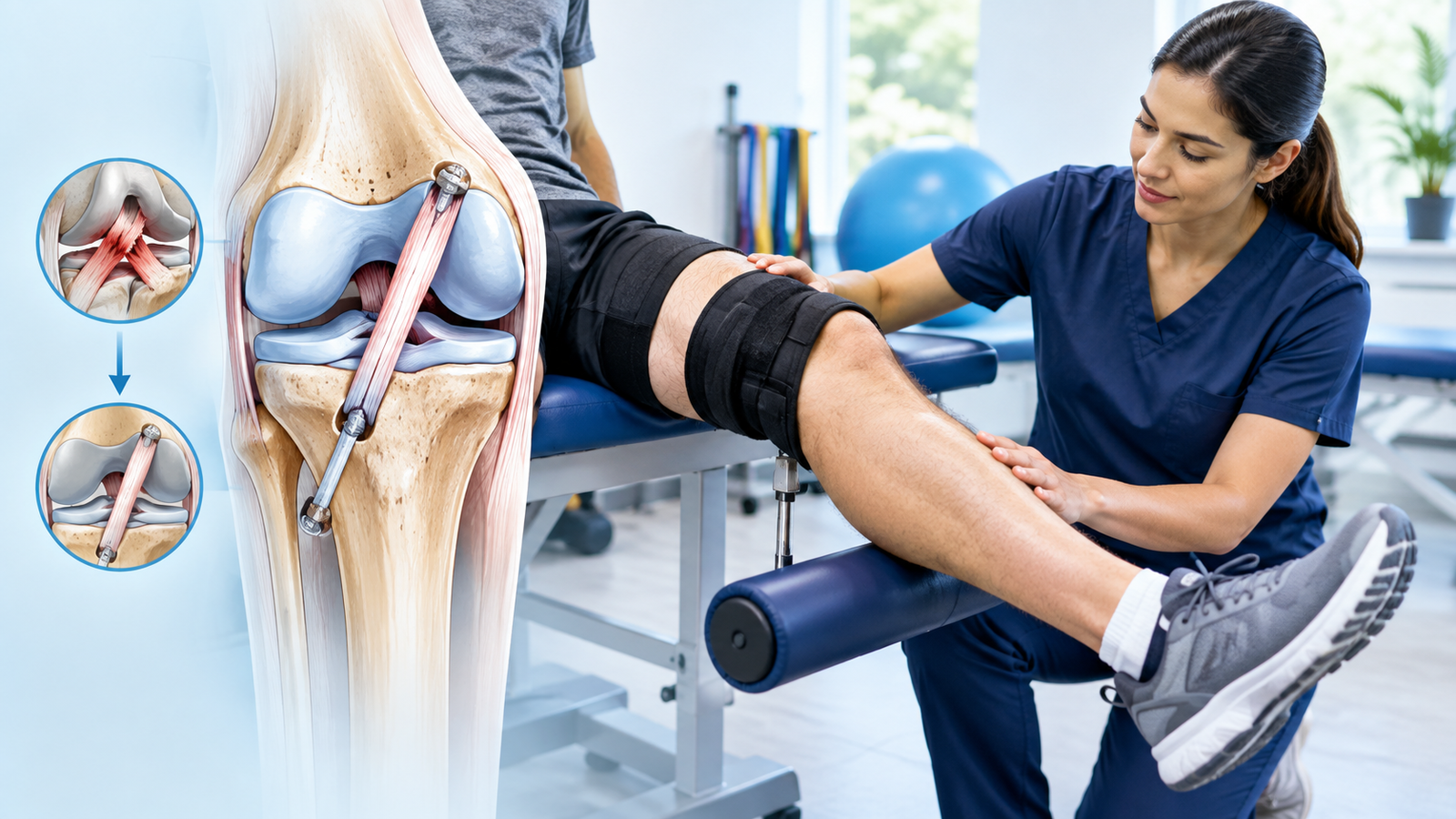

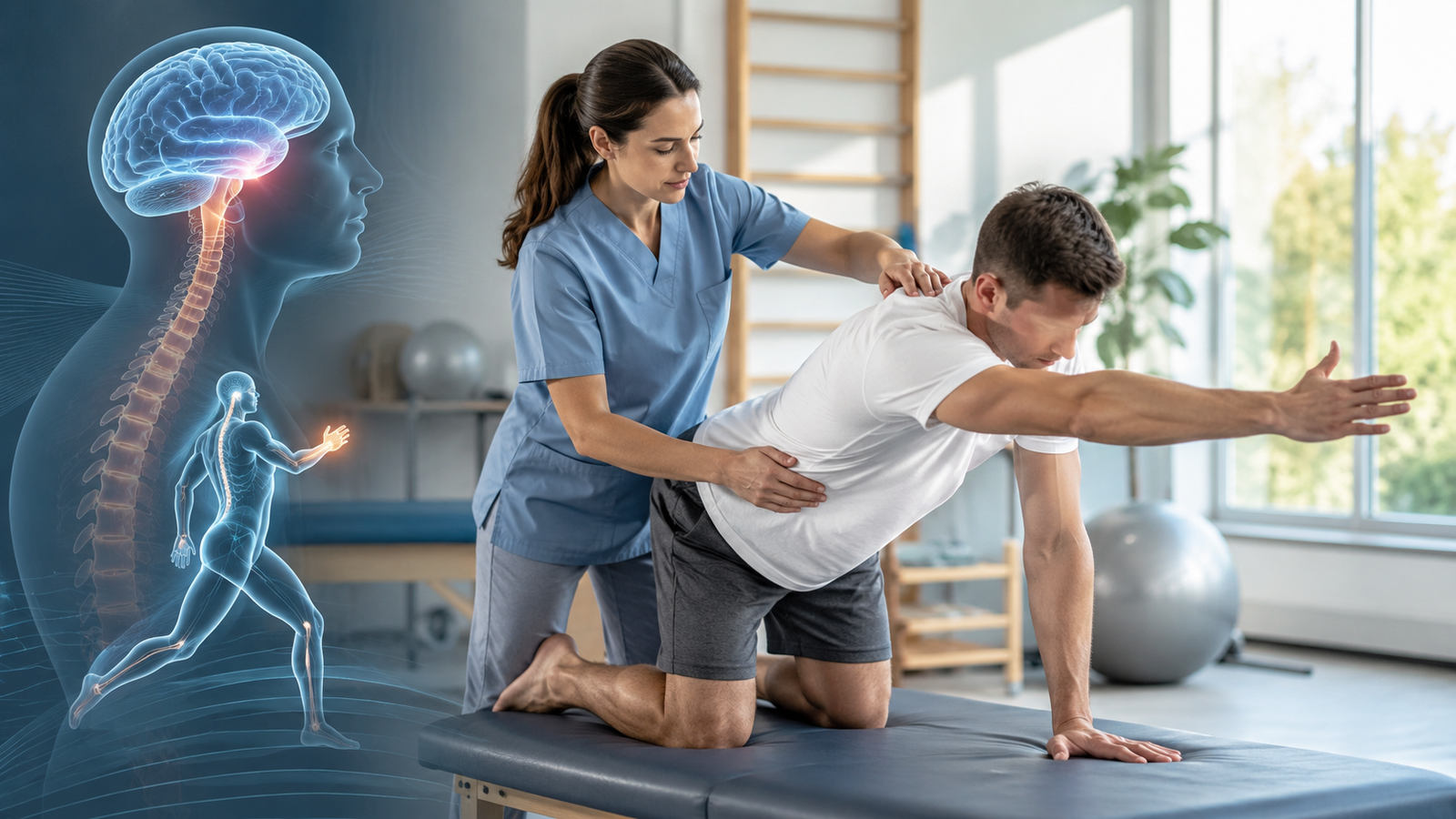
Neurodevelopmental Technique (NDT), associated with the Bobath concept, is used in neurological physiotherapy to address movement, posture, balance and functional difficulties. Learn about NDT principles, techniques, exercises, precautions and its role in stroke and neurological rehabilitation.
Neurodevelopmental Technique (NDT), commonly associated with the Bobath concept, is a rehabilitation approach used in neurological physiotherapy to help people improve movement, posture, balance and functional activities after neurological injury or disease.
Conditions affecting the brain, spinal cord or nervous system can change the way a person moves. Weakness, abnormal muscle tone, poor balance, impaired coordination and difficulty controlling selective movements may make everyday activities such as sitting, standing, walking, reaching or dressing challenging.
NDT focuses on understanding how a person moves during functional activities and using therapeutic handling, positioning, movement practice and task-specific activities to encourage more efficient movement.
It is important to understand that NDT is not a single exercise or machine-based treatment. Modern neurological rehabilitation generally combines movement-based approaches with active practice, strengthening, task-specific training and other evidence-informed strategies according to the patient’s individual needs.
Important: NDT should be individualized after a proper neurological and physiotherapy assessment. It should not be considered a guaranteed treatment or cure for neurological disorders.
What Is Neurodevelopmental Technique?
Neurodevelopmental Technique is a neurological rehabilitation approach traditionally associated with the work of Berta and Karel Bobath.
The approach was developed to help people with neurological movement problems improve their ability to perform functional activities.
In simple terms, the physiotherapist observes:
- How the patient moves
- Which movements are difficult
- How muscle tone affects movement
- How posture influences function
- How the patient controls their body during activities
- Which movement strategies are helping or limiting performance
The therapist may then use therapeutic handling, positioning, guided movement and functional practice to facilitate more effective movement.
The exact methods used should depend on the individual patient rather than following one fixed treatment protocol.
What Is the Bobath Concept?
The terms NDT and Bobath concept are frequently used together in neurological physiotherapy.
The Bobath concept has evolved over time. Contemporary practice places considerable emphasis on:
- Individual assessment
- Functional movement
- Patient participation
- Task-specific practice
- Motor learning
- Postural control
- Active movement
- Problem-solving
- Carryover into everyday activities
Therefore, modern neurological rehabilitation should not be viewed simply as a therapist moving a patient’s limbs.
The patient should actively participate whenever their neurological and physical condition allows.
How Does Neurodevelopmental Technique Work?
NDT is based on the idea that neurological conditions can alter normal movement strategies.
For example, after a stroke, a person may develop:
- One-sided weakness
- Increased or decreased muscle tone
- Poor trunk control
- Abnormal movement patterns
- Difficulty shifting weight
- Reduced balance
- Difficulty using the affected arm
- Problems controlling the affected leg
Instead of focusing only on the weak muscle, the therapist considers the whole movement pattern and the functional task.
For example, getting up from a chair requires more than quadriceps strength. It also involves:
- Trunk movement
- Hip and knee control
- Foot placement
- Weight transfer
- Postural stability
- Balance
- Coordination
- Timing
NDT-based rehabilitation may therefore address these components together.
Conditions Where NDT May Be Used
NDT principles may be incorporated into rehabilitation for people with neurological movement disorders such as:
Stroke
Stroke rehabilitation is one of the areas in which NDT has historically been widely used.
Treatment may address:
- Hemiparesis
- Abnormal muscle tone
- Trunk control
- Sitting balance
- Standing balance
- Upper-limb function
- Walking
- Transfers
- Functional independence
Cerebral Palsy
Children with cerebral palsy may have difficulties involving:
- Muscle tone
- Postural control
- Balance
- Coordination
- Selective motor control
- Walking
- Hand function
NDT principles may be incorporated into an individualized pediatric rehabilitation program.
Traumatic Brain Injury
Following traumatic brain injury, rehabilitation may address:
- Balance
- Coordination
- Postural control
- Mobility
- Functional movement
- Motor planning
Spinal Cord Injury
Depending on the level and completeness of injury, rehabilitation may focus on:
- Trunk control
- Transfers
- Standing
- Balance
- Strength
- Walking
- Functional mobility
Multiple Sclerosis and Other Neurological Conditions
Some principles of NDT may also be incorporated into rehabilitation for individuals with other neurological conditions when appropriate.
The treatment approach should always be adapted to the patient’s diagnosis, symptoms, fatigue level, functional capacity and rehabilitation goals.
Main Goals of Neurodevelopmental Physiotherapy
The goals vary according to the patient’s condition.
Common goals include:
- Improving postural alignment
- Improving trunk control
- Encouraging active movement
- Improving balance
- Improving weight shifting
- Facilitating functional movement
- Improving coordination
- Reducing movement limitations
- Improving walking
- Improving upper-limb function
- Increasing independence in daily activities
The ultimate goal is not simply to produce a particular movement in the therapy room.
The goal is to help the patient use improved movement strategies during meaningful everyday activities.
NDT Assessment in Physiotherapy
Before beginning treatment, the physiotherapist should perform a comprehensive assessment.
1. Postural Assessment
The therapist may observe:
- Head position
- Trunk alignment
- Pelvic position
- Shoulder alignment
- Sitting posture
- Standing posture
Posture can influence how effectively a person performs movement.
2. Muscle Tone Assessment
Neurological conditions can produce changes such as:
- Spasticity
- Hypotonia
- Rigidity
- Abnormal co-contraction
Muscle tone should be interpreted together with functional movement rather than treated as an isolated finding.
3. Strength Assessment
Muscle strength may be evaluated using methods such as Manual Muscle Testing (MMT).
However, strength is only one component of neurological function.
A patient may have reasonable strength but still struggle with movement because of impaired coordination, balance, motor control or sensory problems.
4. Sensory Assessment
The physiotherapist may assess:
- Light touch
- Proprioception
- Pain and temperature awareness
- Vibration
- Other relevant sensory functions
Sensory information plays an important role in movement and balance.
5. Functional Assessment
Functional activities may include:
- Rolling
- Sitting
- Bed mobility
- Sit-to-stand
- Transfers
- Standing
- Walking
- Stair climbing
- Reaching
- Grasping
- Dressing-related activities
Common NDT Physiotherapy Techniques
The specific intervention depends on the patient.
Therapeutic Handling
The therapist may use their hands to guide or support movement.
Handling may be used to:
- Improve alignment
- Facilitate weight transfer
- Assist selective movement
- Provide sensory information
- Reduce unnecessary movement
- Support functional activity
Handling should not replace active participation.
Positioning
Appropriate positioning can help:
- Maintain joint alignment
- Promote comfort
- Reduce risk of contracture
- Support functional movement
- Manage prolonged immobility
Positioning should be individualized, especially in patients with significant weakness, pain or spasticity.
Trunk Control Training
Trunk control is essential for many functional movements.
Exercises may include:
- Sitting balance
- Reaching in sitting
- Weight shifting
- Trunk rotation
- Supported standing
- Transitional movements
Weight-Bearing Activities
Controlled weight-bearing can be incorporated into functional rehabilitation where appropriate.
Examples include:
- Supported standing
- Weight shifting
- Sit-to-stand
- Stepping
- Reaching while standing
Gait Training
Walking rehabilitation may include:
- Standing alignment
- Weight transfer
- Step initiation
- Foot placement
- Knee control
- Hip control
- Balance
- Walking with an appropriate assistive device
NDT for Stroke Rehabilitation
After stroke, patients may develop hemiparesis, meaning weakness affecting one side of the body.
NDT-based treatment may address:
Affected upper limb
- Shoulder positioning
- Scapular movement
- Reaching
- Weight-bearing through the arm
- Hand opening
- Functional grasp and release
Affected lower limb
- Hip control
- Knee control
- Ankle movement
- Weight acceptance
- Step training
- Walking
Trunk
- Sitting control
- Trunk rotation
- Weight shifting
- Transitional movements
The program should be combined with active repetitive practice of relevant tasks.
NDT and Spasticity
Spasticity is a common problem after certain neurological injuries.
It may cause:
- Muscle stiffness
- Restricted movement
- Abnormal postures
- Difficulty walking
- Difficulty opening the hand
- Muscle spasms
Physiotherapy may use positioning, active movement, functional weight-bearing, stretching where appropriate and task-specific practice as part of overall management.
However, spasticity can have different causes and presentations.
If spasticity suddenly increases, the patient should be assessed for possible triggers such as pain, infection, skin problems or other medical issues rather than assuming that more stretching is always the answer.
NDT for Balance and Postural Control
Good postural control is essential for safe movement.
A physiotherapist may progress balance training from:
Supported sitting → Independent sitting → Reaching → Supported standing → Weight shifting → Stepping → Dynamic balance → Functional walking
The progression depends on the patient’s abilities and safety.
Patients with significant balance impairment should not perform challenging standing exercises without appropriate supervision.
NDT and Gait Training
Walking is a complex task involving the interaction of:
- Strength
- Balance
- Sensory information
- Coordination
- Motor control
- Joint mobility
- Cardiovascular endurance
NDT principles may be incorporated into gait rehabilitation to improve movement quality and functional performance.
However, gait training should generally involve repeated walking practice, not only preparatory exercises.
An assistive device such as a cane, walker or other appropriate support may be used when necessary.
NDT for Upper-Limb Rehabilitation
Neurological conditions can significantly affect reaching and hand function.
Treatment may incorporate:
- Scapular mobility
- Reaching practice
- Supported upper-limb activities
- Weight-bearing
- Grasp and release
- Object manipulation
- Bilateral activities
- Task-specific hand practice
Functional tasks can make rehabilitation more meaningful.
For example, reaching for a cup may be more functionally relevant than repeatedly moving the arm without a specific purpose.
Exercises Commonly Included in an NDT-Based Program
There is no universal NDT exercise list.
Depending on the patient’s needs, rehabilitation may include:
Bed exercises
- Bridging
- Pelvic movements
- Rolling practice
- Active-assisted limb movements
Sitting exercises
- Reaching
- Weight shifting
- Trunk rotation
- Balance activities
Standing exercises
- Sit-to-stand
- Weight shifting
- Supported reaching
- Step practice
Walking exercises
- Forward walking
- Direction changes
- Step training
- Obstacle negotiation
- Stair practice where appropriate
The exercises should be selected according to the patient’s neurological findings and functional goals.
Benefits and Limitations of NDT
NDT can provide a structured framework for clinical assessment and movement-based rehabilitation.
Potential benefits of an individualized program may include:
- Better awareness of body position
- Improved postural control
- Improved functional movement
- Improved balance
- Improved mobility
- Better performance of everyday tasks
However, it is important not to overstate what NDT can achieve.
Research on neurological rehabilitation suggests that no single rehabilitation approach should be considered universally superior for every patient. Modern rehabilitation commonly combines task-specific practice, strengthening, aerobic conditioning, balance training, gait training and other evidence-informed interventions.
The best program is one that is appropriate for the patient’s condition and helps them work toward meaningful functional goals.
NDT vs Conventional Physiotherapy
NDT is not necessarily an alternative to conventional physiotherapy.
A neurological physiotherapy program may combine NDT principles with:
- Therapeutic exercise
- Strength training
- Balance training
- Gait training
- Cardiovascular conditioning
- Functional task practice
- Motor learning
- Patient education
- Home exercise
The physiotherapist should select interventions based on the patient’s assessment rather than using a technique simply because of the diagnosis.
Precautions During NDT Physiotherapy
Neurological rehabilitation requires appropriate safety precautions.
Important considerations include:
- Assess fall risk before standing or walking activities.
- Avoid forcing stiff or painful joints.
- Monitor fatigue during treatment.
- Protect joints with poor motor control.
- Be careful with the shoulder in patients with hemiparesis.
- Avoid excessive traction on a weak or poorly controlled limb.
- Monitor blood pressure and other vital signs when clinically indicated.
- Protect areas with reduced sensation from pressure and excessive heat.
- Use appropriate transfer and gait assistance.
- Stop and seek medical assessment if new neurological symptoms develop.
Home Advice for Patients Undergoing NDT Rehabilitation
Home rehabilitation can reinforce supervised therapy.
Patients and caregivers should:
- Follow the physiotherapist’s prescribed home program.
- Practice functional activities safely.
- Encourage active participation rather than doing everything for the patient.
- Maintain safe positioning.
- Use prescribed walking aids correctly.
- Keep pathways clear to reduce fall risk.
- Encourage regular movement within safe limits.
- Avoid unsupervised difficult balance exercises.
- Monitor skin, especially in areas with reduced sensation or prolonged pressure.
- Attend regular follow-up assessments.
Advice for caregivers
Caregivers should provide the right amount of assistance.
Doing every movement for a patient may reduce opportunities for active motor practice. On the other hand, forcing a patient to perform movements beyond their ability may increase injury and fall risk.
The physiotherapist can demonstrate safe assistance techniques to caregivers.
How Often Is NDT Physiotherapy Needed?
There is no single schedule suitable for everyone.
Frequency may depend on:
- Diagnosis
- Severity of impairment
- Time since neurological injury
- Fatigue
- Medical stability
- Functional goals
- Home support
- Ability to participate independently
A physiotherapist can develop an individualized treatment and home-exercise plan after assessment.
Consistency and appropriate practice are generally more important than simply counting therapy sessions.
Can NDT Cure Neurological Conditions?
NDT should not be described as a cure for stroke, cerebral palsy, spinal cord injury or other neurological disorders.
The purpose of rehabilitation is to help the person maximize available function, develop useful movement strategies, improve independence and participate in daily life.
Recovery varies from person to person.
A realistic rehabilitation program focuses on measurable goals such as:
- Standing independently
- Walking a specific distance
- Improving transfer ability
- Using the affected arm during daily activities
- Improving balance
- Becoming more independent at home
When Should You Consult a Neurological Physiotherapist?
Professional assessment may be useful if a patient has:
- Weakness after stroke
- Difficulty walking
- Poor balance
- Muscle stiffness
- Spasticity
- Abnormal movement patterns
- Reduced coordination
- Difficulty using an arm or hand
- Difficulty transferring from bed to chair
- Neurological movement problems
- Reduced independence with daily activities
Early assessment can help identify functional limitations and establish appropriate rehabilitation goals.
Frequently Asked Questions About Neurodevelopmental Technique
1. What is Neurodevelopmental Technique in physiotherapy?
Neurodevelopmental Technique (NDT) is a neurological rehabilitation approach associated with the Bobath concept. It uses assessment, therapeutic handling, movement practice, positioning and functional activities to address movement and postural-control problems.
2. Is NDT the same as the Bobath technique?
The terms are closely associated, although terminology and clinical practice have evolved over time. NDT is commonly used to describe neurological rehabilitation based on principles associated with the Bobath concept.
3. Can NDT help stroke patients?
NDT principles may be incorporated into stroke rehabilitation to address problems such as weakness, impaired postural control, balance difficulties and functional mobility. Modern stroke rehabilitation usually combines multiple evidence-informed approaches.
4. Can NDT reduce spasticity?
NDT may incorporate positioning, movement practice and functional activities for patients with spasticity. However, management of significant spasticity may also require medical assessment and other interventions.
5. Is NDT useful for cerebral palsy?
NDT principles may be incorporated into individualized rehabilitation for children with cerebral palsy. Treatment should focus on meaningful functional goals, participation and age-appropriate activities.
6. Can NDT help a patient walk again?
NDT-based rehabilitation may contribute to walking rehabilitation, but walking recovery depends on factors such as the neurological diagnosis, severity of impairment, strength, balance, sensation and overall health.
7. What exercises are used in NDT?
There is no fixed list of NDT exercises. Depending on the patient, treatment may include trunk control, reaching, weight shifting, sit-to-stand, balance, gait training and functional task practice.
8. Is NDT better than conventional physiotherapy?
NDT should not automatically be considered superior to other physiotherapy approaches. Contemporary neurological rehabilitation often combines several approaches according to the patient’s goals and clinical presentation.
9. Can NDT be performed at home?
Some exercises and functional activities can be performed at home after a physiotherapist teaches the patient and caregiver how to perform them safely. Challenging balance, transfer or gait exercises may require supervision.
10. Where can I get neurological physiotherapy in Nalbari or Rangia?
Patients from Nalbari, Rangia and surrounding areas can seek professional neurological physiotherapy assessment at suitable physiotherapy centers or consider home physiotherapy when travelling is difficult.
Physiotherapy & Rehabilitation in Nalbari and Rangia, Assam
Neurodevelopmental Technique is most useful when it forms part of a personalized neurological rehabilitation program. Patients with stroke, cerebral palsy, spinal cord injury, traumatic brain injury and other neurological movement problems may require detailed assessment of strength, muscle tone, balance, coordination, sensation and functional mobility before treatment is planned.
Patients from Nalbari, Rangia and nearby areas can visit:
1. Dr. Jehu’s KinetiQure Physiotherapy & Rehabilitation Center
Khatikuchi, Nalbari, Assam – 781369
Patients can seek professional physiotherapy assessment for neurological movement difficulties and receive an individualized rehabilitation program based on their functional limitations and goals.
2. RevitaFlex PhysioCare – Dhamdhama Branch
Dhamdhama–Santipur Road, Near Dhamdhama Bus Stand, Dhamdhama, Nalbari, Assam – 781349
Patients requiring neurological physiotherapy and rehabilitation can seek assessment and guidance regarding movement, balance, walking and functional independence.
3. RevitaFlex PhysioCare – Dimu Branch
Dimu–Dobok Chariali, Dimu–Baharghat Road, Dimu, Rangia, Assam – 781380
This branch may be convenient for patients from Rangia, Dimu and surrounding areas seeking physiotherapy assessment and rehabilitation.
Home Physiotherapy Visit
For patients with significant mobility difficulties, weakness or balance problems who cannot easily travel to a clinic, home physiotherapy visits may be considered.
Dr. Jehirul Islam (PT), Consultant Physio
Contact/WhatsApp: +91 7086225195
Email: draaryanphysio@gmail.com
A professional assessment can help determine whether NDT-based principles, therapeutic exercise, gait training, balance rehabilitation, strengthening or other neurological physiotherapy interventions are appropriate for the individual patient.
Conclusion
Neurodevelopmental Technique is an established concept within neurological rehabilitation that emphasizes understanding movement, postural control and functional activity.
For patients with neurological conditions, rehabilitation should go beyond simply moving a weak limb. A well-designed program considers motor control, strength, balance, sensation, coordination, mobility and meaningful daily activities.
NDT principles may be valuable as part of this broader rehabilitation approach, but treatment should always be individualized. The objective is to help each patient achieve the highest practical level of safe and meaningful independence rather than promising a particular outcome.
Clinical Disclaimer
The information provided in this article about Neurodevelopmental Technique is intended for general educational and informational purposes only. It should not be considered a substitute for professional medical diagnosis, treatment, or individualized physiotherapy advice. Neurological conditions vary considerably between individuals, and the appropriate rehabilitation program depends on the patient’s diagnosis, neurological findings, medical status, functional limitations and rehabilitation goals. Do not start, modify or discontinue any exercise or treatment based solely on the information presented here. Patients experiencing new, worsening or severe neurological symptoms should seek prompt medical evaluation. Always consult a qualified healthcare professional or physiotherapist for personalized assessment and rehabilitation.
 Previous Post