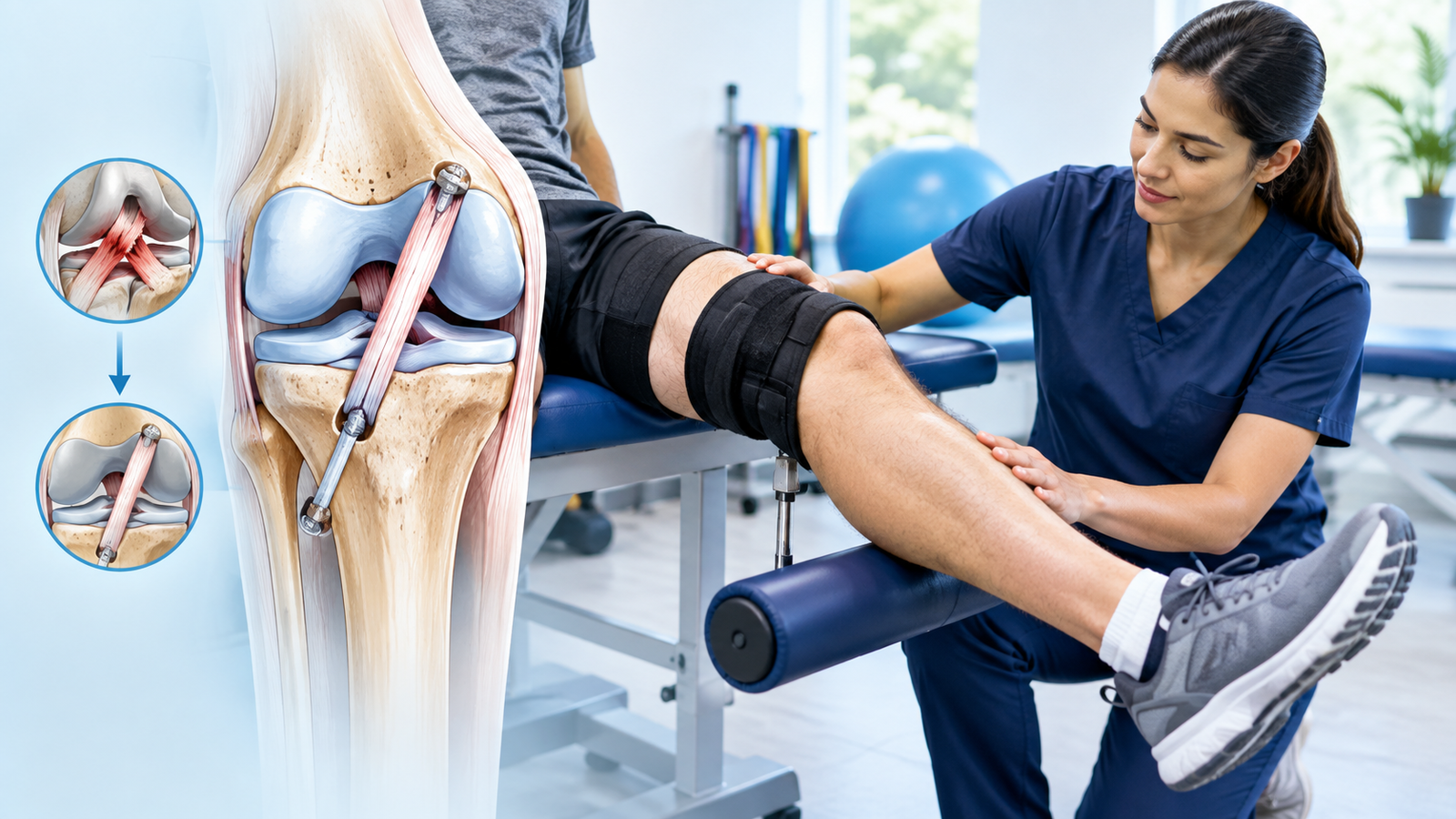

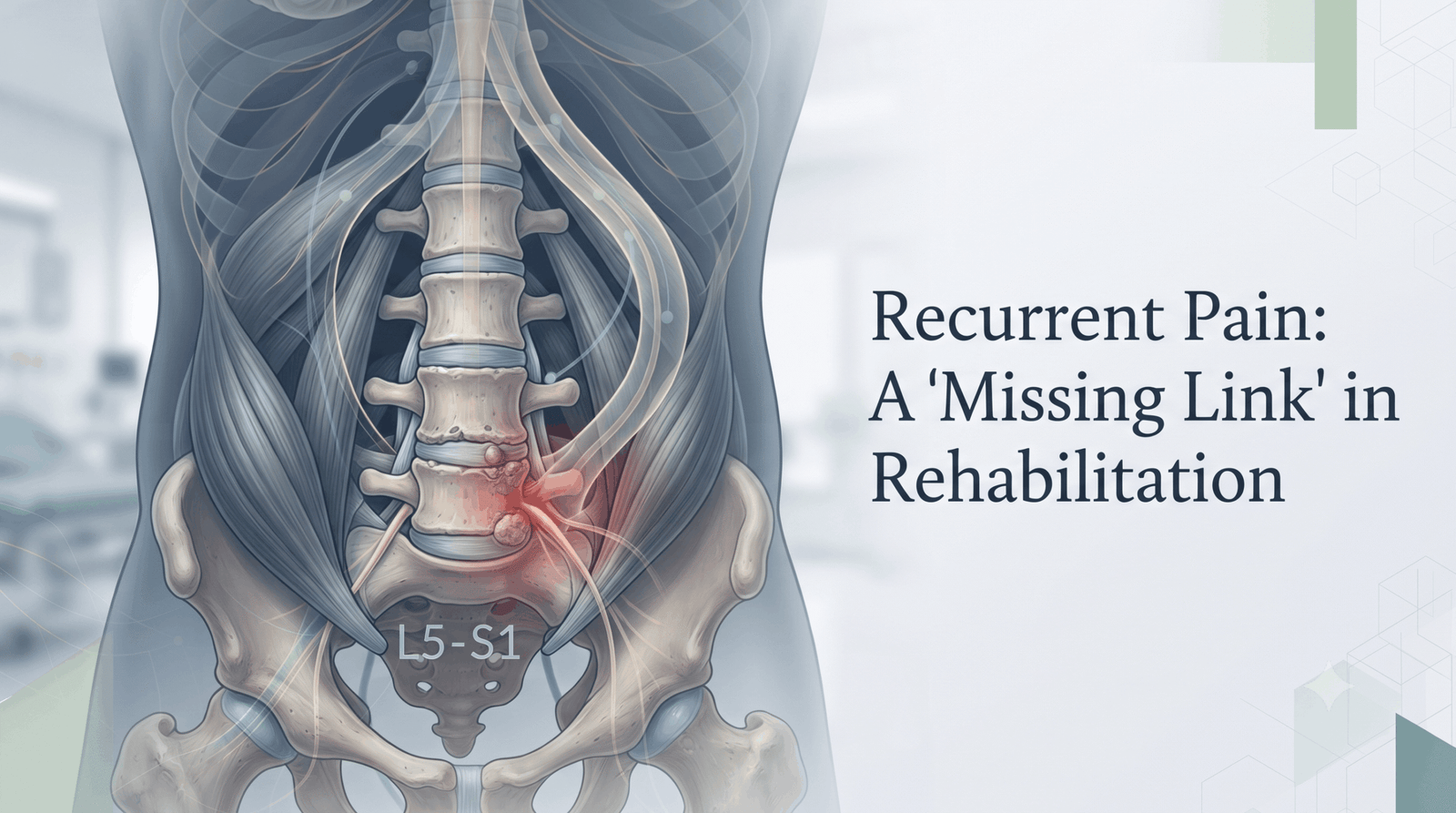
Pain relief does not always mean complete recovery. Discover why pain may return after temporary relief and how physiotherapy, progressive strengthening, movement retraining and individualized rehabilitation can help improve physical capacity and long-term self-management.
Pain relief can feel like the problem has finally been solved. You may feel better after physiotherapy, medication, rest, massage, heat, exercise, or other treatment—but then the pain gradually returns when you resume normal activities.
This can be frustrating and confusing.
“If the pain went away, why did it come back?”
The answer is often that pain relief and complete functional recovery are not always the same thing. Temporary improvement may reduce symptoms without fully addressing the factors that contributed to the problem in the first place.
The missing link may involve reduced muscle strength, poor movement patterns, limited joint mobility, inadequate load tolerance, poor posture, reduced physical activity, work-related stress, insufficient recovery, or returning to demanding activities too quickly.
Physiotherapy rehabilitation aims to look beyond the symptom and understand why the problem keeps returning.
What Does It Mean When Pain Keeps Coming Back?
Recurring pain means that symptoms improve for a period of time but return after certain activities, movements, positions, or changes in routine.
For example:
- Back pain improves after a few days of rest but returns after prolonged sitting.
- Knee pain settles with medication but returns after walking or climbing stairs.
- Shoulder pain improves after treatment but returns when overhead activity resumes.
- Neck pain decreases after massage but returns after long hours of computer or phone use.
- Heel pain improves but returns when walking or standing increases.
This does not necessarily mean that the previous treatment “didn’t work.”
It may indicate that the body has not yet developed enough capacity to tolerate the demands being placed on it.
Pain Relief Is Not Always the Same as Recovery
One of the most important concepts in rehabilitation is the difference between symptom control and functional recovery.
Pain is an important protective signal, but pain intensity alone does not tell us everything about tissue capacity, strength, mobility, coordination, or movement control.
A person may experience less pain while still having:
- Muscle weakness
- Reduced joint mobility
- Poor balance
- Reduced endurance
- Movement coordination problems
- Poor load tolerance
- Muscle tightness
- Fear of movement
- Reduced physical conditioning
Therefore, simply asking “Is your pain better?” may not be enough.
A physiotherapist may also assess:
Can you move better? Can you tolerate more activity? Has your strength improved? Can you perform your daily activities safely and confidently?
These questions help identify whether meaningful rehabilitation has occurred.
The Missing Link: Building Capacity
A common reason pain returns is that the body improves symptomatically but does not regain sufficient physical capacity.
What is physical capacity?
Physical capacity refers to the ability of your muscles, joints, nervous system and cardiovascular system to tolerate and perform the activities you need in everyday life.
For example, suppose someone develops low back pain after repeatedly lifting heavy objects.
Rest may reduce the pain.
But if the person returns to the same lifting workload while the back and surrounding muscles remain weak or poorly conditioned, symptoms may return.
The missing component may be progressive rehabilitation.
The goal is not simply to make you feel better today.
The goal is to gradually improve your ability to handle tomorrow’s demands.
8 Common Reasons Pain Returns After Temporary Relief
1. The Underlying Cause Was Not Fully Addressed
Pain can have multiple contributing factors.
For example, someone with knee pain may also have:
- Reduced quadriceps strength
- Poor lower-limb control
- Limited ankle mobility
- Reduced hip strength
- Increased training load
- Poor movement mechanics
If only the painful area is treated, some contributing factors may remain.
This is why a comprehensive physiotherapy assessment can be valuable.
2. Treatment Focused Only on Pain Reduction
Heat, cold therapy, manual therapy, electrotherapy and other interventions can sometimes help manage symptoms.
However, passive treatments are generally only one part of rehabilitation.
Depending on the condition, longer-term recovery may also require:
- Therapeutic exercise
- Strength training
- Mobility work
- Balance training
- Motor-control exercises
- Functional retraining
- Gradual activity progression
- Education and self-management
The exact combination should depend on the individual’s condition and assessment findings.
3. Muscles Remain Weak
Pain and inactivity can contribute to reduced physical activity and deconditioning.
For example, after prolonged knee pain, a person may avoid using the affected leg normally.
Over time, reduced activity can affect muscle strength and endurance.
When normal activities resume, the muscles may not yet be prepared for the workload.
This can contribute to symptom recurrence.
Rehabilitation therefore often involves progressive strengthening.
The exercise program may begin with relatively simple movements and gradually progress according to:
- Pain response
- Strength
- movement quality
- endurance
- functional requirements
- individual goals
4. The Body Was Loaded Too Quickly
Another common problem is doing too much too soon.
Imagine someone has shoulder pain and feels significantly better after treatment.
They immediately return to heavy gym training.
The symptoms may return—not necessarily because the treatment failed, but because the shoulder was exposed to a workload that exceeded its current tolerance.
Rehabilitation should often follow a gradual progression:
Reduce aggravating load → restore movement → build strength → increase capacity → return to activity
The precise progression varies from person to person.
5. Daily Habits Have Not Changed
Sometimes the treatment is temporary because the factors repeatedly irritating the problem remain unchanged.
Examples include:
- Prolonged sitting
- Repetitive lifting
- Poor workstation setup
- Sudden increases in exercise
- Insufficient recovery
- Long periods of inactivity
- Repetitive occupational movements
- Poor sleep habits
- Returning to sport too quickly
This does not mean that one posture or one habit is necessarily the sole cause of pain.
Instead, rehabilitation considers the overall relationship between activity, load, recovery and individual capacity.
6. The Person Stops Rehabilitation Too Early
Feeling better can create a natural temptation to stop physiotherapy.
But symptom improvement may occur before full functional recovery.
For example:
Week 1: Pain decreases
Week 2: Movement improves
Week 3: Strength begins improving
Week 4+: Functional capacity progressively develops
The timeline is different for every condition and every patient.
Stopping rehabilitation immediately after pain reduction may leave important deficits unaddressed.
7. Fear of Movement Can Limit Recovery
Some people become afraid that movement will damage the body.
As a result, they may avoid certain activities even after the original problem has improved.
This can contribute to:
- Reduced physical activity
- Loss of confidence
- Reduced strength
- Increased sensitivity to movement
- Difficulty returning to normal activities
A physiotherapist can help determine which movements are appropriate and introduce them gradually.
The goal is safe, progressive exposure—not forcing painful movements unnecessarily.
8. The Original Diagnosis May Need Reassessment
Not every recurring pain problem has the same cause.
If symptoms repeatedly return despite appropriate management, reassessment may be necessary.
A physiotherapist or medical professional may consider whether there are:
- Different contributing factors
- Another musculoskeletal condition
- Neurological involvement
- Persistent inflammation
- Significant weakness
- Joint instability
- Referred pain
- Signs requiring medical investigation
Persistent or unexplained symptoms should not simply be repeatedly treated without reconsidering the clinical picture.
Temporary Relief vs Long-Term Rehabilitation
| Temporary symptom relief | Rehabilitation-focused approach |
|---|---|
| Mainly targets symptoms | Addresses symptoms and contributing factors |
| May provide short-term comfort | Builds functional capacity |
| Often passive | Usually combines active and passive strategies |
| May not change physical capacity | Progressively develops strength and tolerance |
| Can be useful during painful stages | Focuses on longer-term self-management |
| Relief may occur quickly | Functional improvements may take time |
This does not mean passive treatments are useless.
They can have an appropriate role in certain situations.
The key is understanding that pain management and rehabilitation are related but not identical goals.
How Physiotherapy Can Help When Pain Keeps Returning
A physiotherapy program should be individualized rather than based on a one-size-fits-all protocol.
Step 1: Comprehensive Assessment
Your physiotherapist may assess:
- Pain characteristics
- Joint range of motion
- Muscle strength
- Flexibility
- Movement patterns
- Balance
- Coordination
- Functional limitations
- Work and lifestyle demands
- Previous injuries
- Exercise habits
The objective is to understand the person’s overall functional picture.
Step 2: Identify Contributing Factors
The assessment may help identify factors such as:
Pain → reduced activity → weakness → reduced load tolerance → difficulty with activity → recurring symptoms
This is not the explanation for every pain condition, but it is one example of how symptoms and physical capacity can interact.
Step 3: Reduce Irritating Loads
The solution is not always complete rest.
Instead, rehabilitation may involve activity modification.
For example:
- Reduce heavy lifting temporarily.
- Break up prolonged sitting.
- Modify exercise intensity.
- Adjust repetitive activities.
- Use appropriate recovery periods.
- Avoid repeatedly provoking severe symptoms.
The goal is often to maintain appropriate movement while managing excessive load.
Step 4: Restore Mobility
Depending on the condition, rehabilitation may include exercises or manual techniques aimed at improving movement.
Examples include:
- Joint mobility exercises
- Stretching when appropriate
- Active range-of-motion exercises
- Soft-tissue techniques
- Movement retraining
Not everyone requires extensive stretching or manual therapy.
Treatment should be based on assessment findings.
Step 5: Rebuild Strength
Strengthening is often an important component of musculoskeletal rehabilitation.
A program may progress from:
Low-load exercise → resistance exercise → functional strengthening → task-specific loading
Examples may include:
- Isometric exercises
- Resistance-band exercises
- Free-weight exercises
- Bodyweight exercises
- Closed-chain exercises
- Functional strengthening
The exercise dosage should be individualized.
Step 6: Improve Movement Control
Strength alone may not be enough.
Some patients need to improve how they coordinate movement.
This may involve:
- Balance exercises
- Proprioceptive training
- Core control
- Scapular control
- Lower-limb alignment
- Functional movement training
- Sport-specific drills
The objective is to make movement more efficient and appropriate for the individual’s activities.
Step 7: Gradually Increase Load Tolerance
This is one of the most important principles of rehabilitation.
The body adapts to appropriately dosed physical stress.
For example, someone returning to running may progress from:
Walking → walk/jog → short runs → longer runs → higher training volume
A weight-training patient might progress from:
Light resistance → moderate resistance → heavier resistance → sport/work-specific loading
Progression should be guided by symptoms, function and individual response.
Step 8: Return to Real-Life Activities
Successful rehabilitation should eventually connect with the activities that matter to you.
That may mean returning to:
- Work
- Walking
- Running
- Gym training
- Sports
- Household activities
- Lifting
- Driving
- Recreational activities
The final stage of rehabilitation is not simply “pain is gone.”
It is often:
“I can perform my important activities with improved confidence, control and capacity.”
What You Can Do at Home
Your home program is an important part of rehabilitation.
Follow your prescribed exercises consistently
Doing exercises occasionally may not provide the same training stimulus as a structured program.
Avoid repeatedly testing the painful movement
Constantly checking whether something still hurts can repeatedly irritate the area.
Increase activity gradually
Avoid sudden jumps in:
- Walking distance
- Exercise volume
- Gym intensity
- Running
- Lifting
- Workload
Take movement breaks
If your daily routine involves prolonged sitting, incorporate regular movement breaks where practical.
Monitor your response
A mild, manageable response during rehabilitation may sometimes be acceptable depending on the condition, but severe, worsening or persistent symptoms should be discussed with your healthcare professional.
When Should You Seek Professional Assessment?
Consider professional assessment when:
- Pain repeatedly returns.
- Symptoms are progressively worsening.
- Pain is limiting daily activities.
- You have persistent weakness.
- You develop significant movement restriction.
- Symptoms continue despite reasonable self-care.
- You are repeatedly relying on temporary treatments.
- You are unsure which exercises are appropriate.
- You want to safely return to sport or demanding work.
Seek urgent medical attention for warning signs
Certain symptoms require prompt medical evaluation rather than routine physiotherapy alone, including:
- New or progressive significant neurological weakness
- Loss of bladder or bowel control
- Numbness around the groin/saddle region
- Severe unexplained pain with systemic illness
- Major trauma with suspected serious injury
- Chest pain or significant breathing difficulty
- Other rapidly worsening or concerning symptoms
The appropriate response depends on the clinical situation.
Why Individualized Physiotherapy Matters
Two people can have pain in the same body region but require completely different rehabilitation plans.
For example, two patients may both report shoulder pain.
One may have:
- Reduced shoulder mobility
- Weakness
- Poor movement control
Another may have:
- A recent injury
- High training demands
- Significant strength deficits
- Different functional goals
Their rehabilitation should not automatically be identical.
Individual assessment is what allows treatment to be tailored to the person’s presentation, goals and functional requirements.
The Goal Is Not Just to Chase Pain
One of the biggest mindset changes in rehabilitation is moving from:
“How do I make this pain disappear today?”
to:
“How can I improve my body’s ability to handle the activities that matter to me?”
Pain relief can be an important milestone.
But sustainable rehabilitation often involves improving:
- Strength
- Mobility
- Endurance
- Balance
- Coordination
- Confidence
- Activity tolerance
- Functional performance
The objective is not to promise that pain can never return.
Instead, rehabilitation aims to help you understand your condition, improve physical capacity and develop strategies for managing future flare-ups when appropriate.
Physiotherapy & Rehabilitation in Nalbari and Rangia, Assam
If your pain repeatedly improves and then returns, simply repeating temporary pain-relief treatments may not answer the bigger question: Why does it keep coming back?
A professional physiotherapy assessment can help identify movement limitations, weakness, reduced capacity, activity-related factors and other potentially modifiable contributors to your symptoms.
Patients from Nalbari, Rangia and nearby areas can seek physiotherapy and rehabilitation services at:
1. Dr. Jehu’s KinetiQure Physiotherapy & Rehabilitation Center
Khatikuchi, Nalbari, Assam – 781369
Physiotherapy services can be considered for a range of musculoskeletal, neurological, sports and rehabilitation needs following appropriate clinical assessment.
2. RevitaFlex PhysioCare – Dhamdhama Branch
Dhamdhama–Santipur Road, Near Dhamdhama Bus Stand, Dhamdhama, Nalbari, Assam – 781349
3. RevitaFlex PhysioCare – Dimu Branch
Dimu–Dobok Chariali, Dimu–Baharghat Road, Dimu, Rangia, Assam – 781380
Home Physiotherapy Visit
Dr. Jehirul Islam (PT), Consultant Physio
Contact/WhatsApp: +91 7086225195
Email: draaryanphysio@gmail.com
If your pain repeatedly returns after temporary relief, a physiotherapy consultation can help determine whether there are strength, mobility, movement-control, workload or functional factors that should be addressed as part of a structured rehabilitation plan.
Frequently Asked Questions
1. Why does my pain come back after physiotherapy?
Pain may return when contributing factors such as weakness, reduced mobility, poor load tolerance, activity demands or incomplete rehabilitation remain. Recurring symptoms may also require reassessment to determine whether the original clinical picture has changed.
2. Does temporary pain relief mean that I am completely recovered?
Not necessarily. Reduced pain is an important improvement, but recovery may also involve restoring strength, mobility, endurance, movement control and the ability to perform daily or sport-specific activities.
3. Why does my back pain keep returning after treatment?
Recurring back pain can have multiple contributing factors, including physical deconditioning, activity-related loading, movement limitations and individual lifestyle or occupational demands. A proper assessment is important rather than assuming there is one universal cause.
4. Can physiotherapy prevent pain from coming back?
Physiotherapy can help address modifiable factors such as strength, mobility, physical capacity, movement control and activity management. However, no responsible clinician can guarantee that pain will never recur.
5. Should I stop exercising when my pain improves?
Not necessarily. In many rehabilitation programs, exercise is gradually progressed as symptoms and function allow. Suddenly stopping all activity or returning immediately to high workloads may both be inappropriate depending on the condition.
6. How long does rehabilitation take?
There is no single timeline. Recovery depends on the condition, severity, duration of symptoms, physical capacity, medical factors, treatment adherence and functional demands.
7. Is massage enough for recurring pain?
Massage may provide short-term symptom relief for some people, but recurring problems may also require strengthening, mobility work, movement retraining, education and progressive loading depending on the diagnosis.
8. What is progressive loading in physiotherapy?
Progressive loading means gradually increasing the physical demand placed on muscles and tissues as the person’s capacity improves. The progression may involve increasing resistance, repetitions, duration, range of motion, speed or functional complexity.
9. When should I see a physiotherapist for recurring pain?
Consider an assessment when pain repeatedly returns, interferes with daily activities, limits exercise or work, or does not improve as expected. Persistent or concerning symptoms may require medical evaluation as well.
10. Can physiotherapy help if my pain has been present for a long time?
Physiotherapy may help many people with persistent musculoskeletal problems by addressing function, physical capacity, movement and self-management. The appropriate approach depends on the individual’s assessment and diagnosis.
Clinical Disclaimer
This article is intended for general educational purposes and should not be considered a substitute for an individual clinical assessment, diagnosis or medical advice. Pain can have many possible causes, and the appropriate treatment varies between individuals. Exercise or physiotherapy techniques described here may not be suitable for every person or condition. Seek assessment from a qualified physiotherapist or appropriate healthcare professional before starting a rehabilitation program, particularly if symptoms are severe, persistent, worsening or associated with neurological or other warning signs.
 Previous Post
 Next Post