
Muscle imbalance occurs when muscles do not share movement and stabilization demands effectively. Learn how weakness in one muscle can increase the workload of another, common causes and symptoms, physiotherapy assessment, rehabilitation strategies, home advice, precautions, and when to seek professional physiotherapy in Nalbari and Rangia, Assam.
Muscles rarely work in isolation. Every movement—walking, climbing stairs, lifting an object, reaching overhead, or simply maintaining an upright posture—depends on several muscles coordinating with one another. When one muscle becomes weak, inhibited, tight, poorly conditioned, or unable to perform its normal role, other muscles may have to compensate.
Over time, this compensation can contribute to muscle imbalance, altered movement patterns, excessive muscular workload, fatigue, stiffness, and sometimes pain.
For example, if an important stabilizing muscle around the hip is not working effectively, other muscles may increase their activity to maintain movement and joint control. The problem is not always that the overloaded muscle is “damaged.” It may simply be doing more work than it was designed to handle.
Understanding this relationship is important in physiotherapy because effective rehabilitation is not only about treating the painful area. A physiotherapist may need to identify why the muscle is being overloaded in the first place and assess strength, flexibility, joint mobility, movement control, posture, coordination, and functional habits.
What Is Muscle Imbalance?
Muscle imbalance refers to an altered relationship between muscles that normally work together to produce and control movement.
This can involve:
- Weakness in one or more muscles
- Reduced endurance
- Excessive tightness in another muscle
- Poor coordination between muscles
- Differences in strength between the two sides of the body
- Reduced joint mobility
- Poor movement control
- Compensatory movement strategies
A muscle imbalance does not necessarily mean that one muscle is simply “strong” and another is “weak.” Human movement is more complex than that.
A person can have adequate muscle strength but still demonstrate poor timing, coordination, endurance, or motor control.
How Can One Weak Muscle Overload Another?
Think of a movement as a team activity.
Different muscles contribute to:
- Producing movement
- Stabilizing joints
- Controlling movement
- Maintaining posture
- Decelerating or braking movement
If one member of this team cannot perform its role effectively, another muscle may increase its contribution.
For example, imagine the muscles around the hip during walking. If a hip stabilizer does not adequately control the pelvis, other muscles may increase their activity to help maintain stability.
The body is essentially saying:
“Something isn’t contributing enough, so another structure needs to help.”
This compensation can be useful temporarily. However, if the underlying problem persists, repeated overuse may contribute to fatigue, stiffness, reduced movement efficiency, or pain.
Common Causes of Muscle Imbalance
Muscle imbalance can develop for many different reasons.
1. Prolonged Inactivity
Long periods of sitting, bed rest, or reduced physical activity can cause certain muscles to become weaker or less conditioned.
This is particularly relevant after:
- Injury
- Surgery
- Illness
- Hospitalization
- Neurological conditions
- Extended periods of inactivity
2. Repetitive Activities
Repeatedly performing the same movement can place greater demands on particular muscles.
Examples include:
- Repetitive lifting
- Running
- Cycling
- Certain occupational tasks
- Repeated overhead activities
- Prolonged computer work
3. Previous Injury
After an injury, the nervous system may modify how a person moves.
Even when pain decreases, altered movement patterns may sometimes continue. This can change how different muscles share the workload.
4. Pain-Related Muscle Inhibition
Pain can influence muscle activation.
A muscle surrounding a painful joint may not function normally because the nervous system changes its activation. Other muscles can then compensate.
This is one reason rehabilitation may need to continue even after pain has started to improve.
5. Poor Training Balance
Strengthening one muscle group extensively while neglecting its functional counterparts may contribute to an uneven training pattern.
For example, a recreational athlete who focuses heavily on certain movements but does little work on complementary stabilizing muscles may develop weaknesses in movement control or endurance.
6. Neurological Problems
Conditions affecting the nervous system can alter muscle activation and coordination.
Examples include:
- Stroke
- Spinal cord injury
- Nerve injuries
- Certain neurological disorders
In these situations, muscle imbalance may be more complex and requires individualized assessment.
7. Poor Movement Habits
Repeatedly using a compensatory movement strategy can reinforce that pattern.
This does not necessarily mean that a person’s posture is “bad.” Instead, the body may have learned a movement strategy that is less efficient or less suitable for a particular task.
Signs and Symptoms of Muscle Imbalance
Muscle imbalance does not always cause symptoms. Some people may notice changes only during physical activity or movement assessment.
Possible signs include:
- Localized muscle fatigue
- Recurrent muscle tightness
- Reduced strength
- Reduced endurance
- Difficulty maintaining posture
- One-sided movement
- Reduced balance
- Changes in walking mechanics
- Difficulty performing certain exercises
- Recurrent discomfort during specific activities
- A feeling that one muscle is “doing all the work”
Pain may occur, but pain alone cannot confirm the presence of muscle imbalance.
Many different conditions can produce similar symptoms, so proper assessment is important.
Examples of Muscle Compensation
Hip and Pelvic Muscles
Weakness or poor activation of certain hip muscles may influence pelvic control during walking, running, or single-leg activities.
Other muscles may increase their activity to help maintain stability.
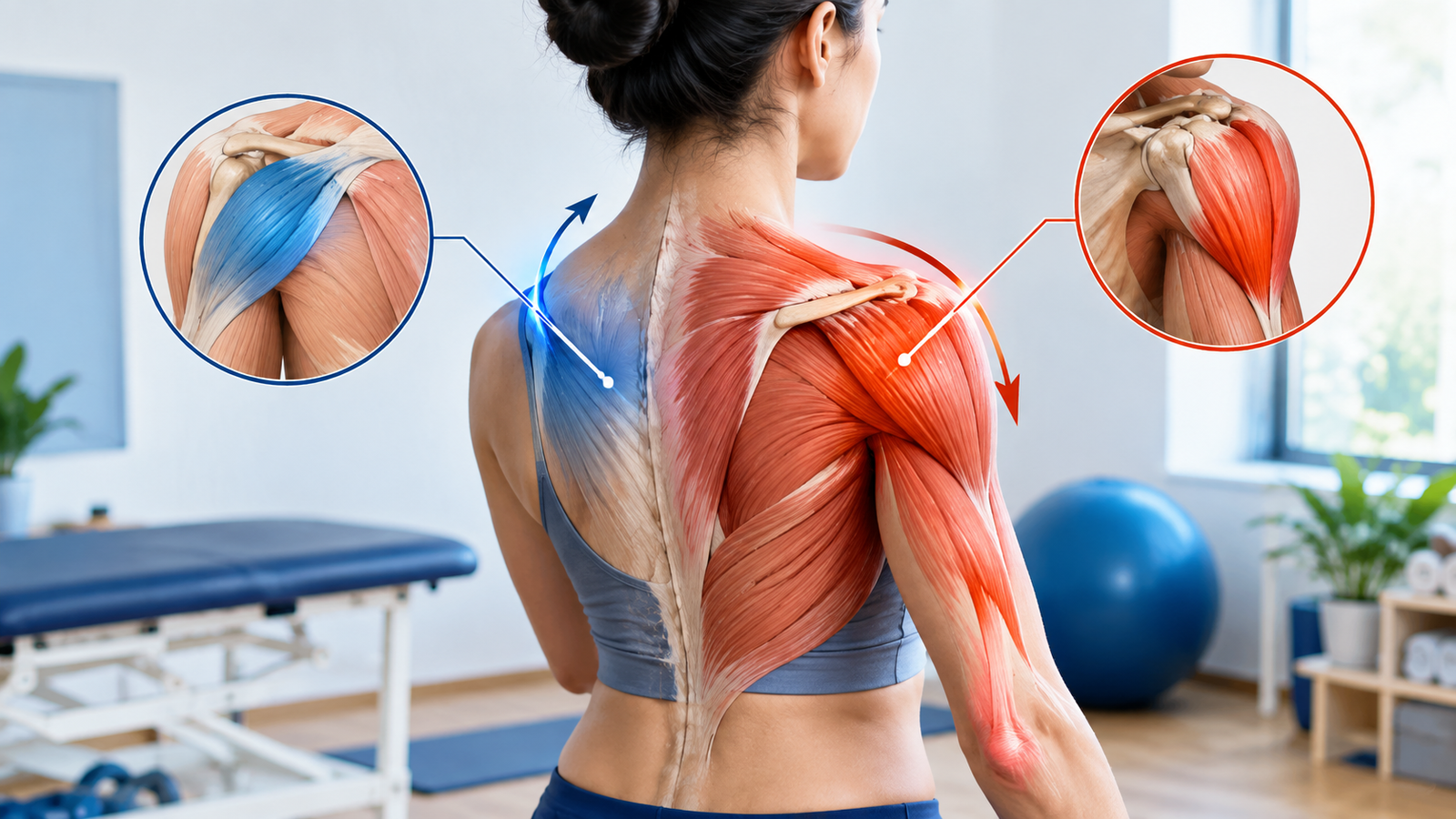
Shoulder Muscles
The shoulder depends heavily on coordinated movement between the rotator cuff, scapular muscles, and larger muscles such as the deltoid and pectoral muscles.
If coordination or strength is altered, another muscle may compensate during reaching or lifting.
Core and Lower Back
The muscles of the trunk work together to control the spine and pelvis.
If trunk control is reduced, a person may rely more heavily on other muscles, potentially increasing muscular workload during certain tasks.
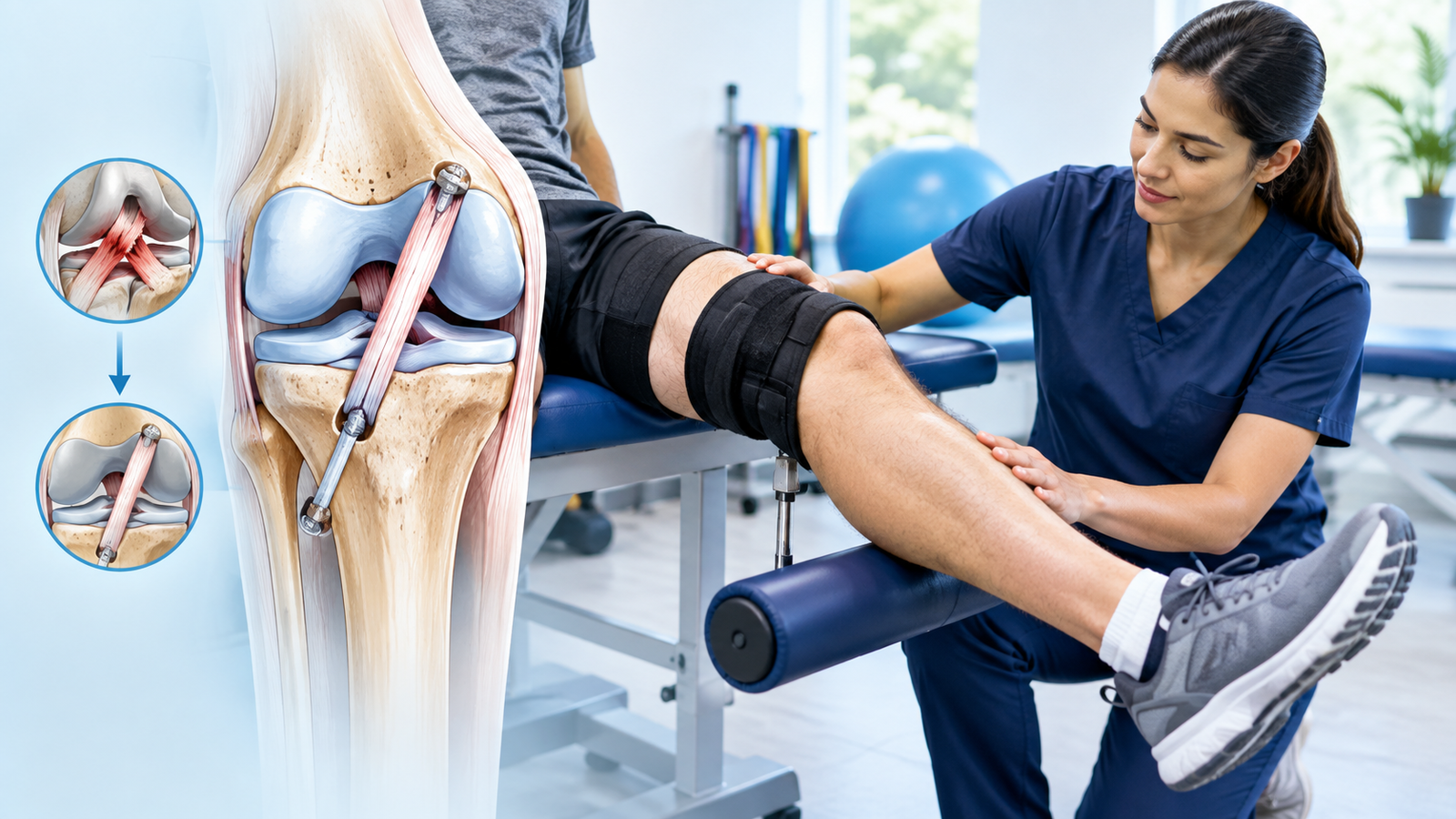
Knee
The quadriceps, hamstrings, calf muscles, hip muscles, and trunk all contribute to lower-limb movement.
A weakness or control deficit in one region can influence movement elsewhere.
This is why a physiotherapist may examine the hip and ankle when someone presents with a knee-related problem.
Is Muscle Tightness Always Caused by Weakness?
No.
This is an important distinction.
A tight muscle is not automatically a weak muscle, and a weak muscle is not necessarily tight.
Muscle stiffness can be influenced by:
- Reduced mobility
- Previous injury
- Training load
- Protective responses
- Prolonged positioning
- Nervous-system factors
- Reduced activity
- Individual movement patterns
Similarly, strengthening a muscle is not always the correct solution for every feeling of tightness.
A physiotherapy assessment helps determine what is actually contributing to the person’s movement problem.
How Physiotherapists Assess Muscle Imbalance
A professional assessment generally looks beyond the painful muscle.
Depending on the person’s symptoms and condition, a physiotherapist may assess:
Muscle Strength
Strength may be assessed manually or with functional exercises and, when available, objective measurement tools.
Muscle Endurance
A muscle may have reasonable peak strength but poor ability to sustain activity.
Flexibility and Mobility
Joint and soft-tissue mobility can influence how muscles function during movement.
Posture and Alignment
Static posture may provide useful information, but dynamic movement is often equally important.
Movement Quality
The physiotherapist may observe:
- Squatting
- Walking
- Stair climbing
- Lunging
- Reaching
- Single-leg activities
- Sport-specific movements
Balance and Coordination
Poor neuromuscular control can contribute to inefficient movement even when basic muscle strength appears adequate.
Functional Activities
The assessment should relate findings to what the person actually wants to do—whether that is walking comfortably, returning to the gym, playing sport, working, or performing daily activities.
Physiotherapy Management of Muscle Imbalance
Treatment should be based on the underlying findings rather than following a generic list of exercises.
1. Targeted Strengthening
Exercises may be selected to improve the strength of muscles that are underperforming.
Examples can include:
- Isometric exercises
- Resistance-band exercises
- Free-weight exercises
- Bodyweight strengthening
- Closed-chain exercises
- Functional strengthening
The appropriate exercise depends on the person’s condition and current capacity.
2. Neuromuscular Re-education
Sometimes the issue is not simply muscle size or strength.
The person may need to improve how and when the muscle works.
Neuromuscular training may involve:
- Controlled movement
- Balance exercises
- Proprioceptive activities
- Coordination drills
- Task-specific training
3. Mobility Exercises
If restricted mobility is contributing to compensation, appropriate mobility or stretching exercises may be incorporated.
The goal is not necessarily to make every muscle as flexible as possible. It is to achieve sufficient mobility for the person’s functional requirements.
4. Manual Therapy
Depending on the clinical presentation, physiotherapists may use techniques such as:
- Soft-tissue techniques
- Joint mobilization
- Myofascial techniques
- Other hands-on approaches
These techniques may be used as part of a broader rehabilitation programme rather than as a substitute for active exercise.
5. Movement Retraining
A patient may need to relearn a more efficient way of performing a particular movement.
This can be especially relevant after:
- Injury
- Surgery
- Prolonged immobilization
- Neurological conditions
- Return to sport
6. Gradual Load Management
Muscles adapt to workload.
Increasing exercise volume or intensity too quickly can overwhelm tissues that are not adequately conditioned.
Physiotherapy may therefore include gradual progression of:
- Resistance
- Repetitions
- Duration
- Speed
- Complexity
- Sport-specific demand
Why Strengthening Only the Weak Muscle May Not Be Enough
This is one of the most important concepts in rehabilitation.
Suppose a person has weakness in a particular muscle. Simply strengthening that muscle may improve its capacity, but the person may still use the old compensatory movement pattern.
Successful rehabilitation may therefore require a combination of:
Strength + mobility + coordination + movement retraining + progressive functional loading.
The exact combination depends on the individual’s assessment.
Home Advice for Muscle Imbalance
A home rehabilitation programme should be individualized, but several general principles are useful.
Stay Physically Active
Avoid unnecessary prolonged inactivity unless medically advised.
Regular movement helps maintain muscle capacity and joint mobility.
Progress Gradually
Do not suddenly increase exercise volume because a particular muscle feels weak.
Allow the body time to adapt.
Focus on Technique
Perform exercises with controlled movement rather than simply trying to complete more repetitions.
Train Movement, Not Just Individual Muscles
Functional movements often require several muscles to work together.
Once basic strength improves, rehabilitation may progress toward movements that resemble daily or sporting activities.
Allow Recovery
Muscles need recovery between demanding sessions.
Adequate rest can be particularly important when returning to exercise after injury or inactivity.
Follow Your Physiotherapist’s Programme
If you have pain, recent surgery, neurological symptoms, or a significant injury, avoid copying exercises from another person’s rehabilitation programme without professional guidance.
Precautions
Muscle imbalance should not be self-diagnosed solely from the presence of pain or tightness.
Seek professional assessment if you experience:
- Persistent or worsening pain
- Significant weakness
- Repeated falls
- Sudden loss of movement
- Numbness or tingling
- New neurological symptoms
- Significant swelling
- Symptoms following major trauma
- Difficulty walking or using a limb normally
Sudden severe weakness, loss of sensation, difficulty speaking, facial drooping, or other acute neurological symptoms require urgent medical attention, rather than routine physiotherapy assessment.
Can Muscle Imbalance Be Prevented?
Not every muscle imbalance can be prevented, particularly when it is related to injury, surgery, neurological disease, or other medical conditions.
However, maintaining general physical fitness can help support healthy movement.
Useful habits include:
- Regular resistance training
- Aerobic activity
- Mobility work when appropriate
- Balanced exercise programmes
- Gradual progression of training
- Adequate recovery
- Good technique
- Avoiding sudden changes in activity levels
For athletes, sport-specific strength and conditioning can also help prepare the body for the demands of their sport.
Muscle Imbalance and Physiotherapy: Looking Beyond the Painful Area
One of the strengths of physiotherapy is its focus on movement and function.
A person may feel pain in one location while the contributing factors involve another part of the body.
For instance, a knee complaint may be influenced by hip strength, ankle mobility, movement coordination, training load, or several factors together.
This does not mean that every pain problem originates somewhere else. Instead, it highlights why a thorough clinical assessment is more useful than assuming that one weak muscle is always responsible.
A physiotherapist can help identify relevant impairments, determine which factors are modifiable, and develop a progressive rehabilitation plan appropriate to the individual’s goals.
Physiotherapy & Rehabilitation in Nalbari and Rangia, Assam
Patients from Nalbari, Rangia and nearby areas experiencing recurrent muscle tightness, weakness, movement difficulties, sports-related problems, or rehabilitation needs may consider a professional physiotherapy assessment.
For muscle imbalance, an assessment can help determine whether the issue involves muscle strength, endurance, mobility, coordination, movement technique, previous injury, or another underlying factor.
Patients can visit:
1. Dr. Jehu’s KinetiQure Physiotherapy & Rehabilitation Center
Khatikuchi, Nalbari, Assam – 781369
The clinic provides physiotherapy and rehabilitation services for musculoskeletal, neurological, sports, pain and functional rehabilitation needs. Patients with suspected muscle imbalance can receive an individualized assessment and exercise-based rehabilitation programme based on their presentation.
2. RevitaFlex PhysioCare – Dhamdhama Branch
Dhamdhama–Santipur Road, Near Dhamdhama Bus Stand, Dhamdhama, Nalbari, Assam – 781349
Patients experiencing movement-related pain, muscle weakness, sports injuries, or functional limitations can seek physiotherapy assessment and rehabilitation according to their clinical needs.
3. RevitaFlex PhysioCare – Dimu Branch
Dimu–Dobok Chariali, Dimu–Baharghat Road, Dimu, Rangia, Assam – 781380
Patients from Rangia, Dimu and surrounding areas may seek professional physiotherapy evaluation for musculoskeletal and rehabilitation concerns, including problems potentially associated with altered muscle function and movement patterns.
Home Physiotherapy Visit
For patients who have difficulty travelling to a clinic or require rehabilitation at home:
Dr. Jehirul Islam (PT), Consultant Physio
Contact/WhatsApp: +91 7086225195
Email: draaryanphysio@gmail.com
A professional home physiotherapy assessment can be particularly useful for individuals with mobility limitations, post-operative rehabilitation needs, neurological conditions, or difficulty accessing clinic-based treatment.
Frequently Asked Questions About Muscle Imbalance
1. What is muscle imbalance?
Muscle imbalance is an altered relationship between muscles involved in movement and stability. It can involve differences in strength, flexibility, endurance, coordination, or activation.
2. Can one weak muscle cause another muscle to become overworked?
Yes, in some movement situations. When one muscle or muscle group cannot adequately perform its role, other muscles may increase their contribution to maintain movement or stability.
3. Does muscle imbalance always cause pain?
No. Some people have measurable differences in strength or movement control without experiencing pain. Pain can have many causes and should not automatically be attributed to muscle imbalance.
4. Can physiotherapy correct muscle imbalance?
Physiotherapy can address relevant impairments through individualized strengthening, mobility exercises, neuromuscular training, movement retraining and progressive functional rehabilitation. The appropriate approach depends on the assessment.
5. Should I stretch a tight muscle if I have muscle imbalance?
Not necessarily. Tightness can have different causes. A physiotherapist can determine whether stretching, mobility exercises, strengthening, load modification, or another intervention is appropriate.
6. Can gym training cause muscle imbalance?
It can contribute to uneven conditioning when training is highly repetitive, poorly balanced, or progressed too quickly. However, resistance training itself is generally an important part of maintaining muscle strength and capacity.
7. How long does it take to improve muscle imbalance?
There is no universal timeframe. It depends on the cause, severity, duration of the problem, overall health, training demands, consistency with rehabilitation, and the individual’s response to treatment.
8. Can muscle imbalance cause knee or back pain?
It may contribute to altered movement or loading in some individuals, but it is not appropriate to assume that muscle imbalance is the sole cause of knee or back pain. A proper clinical assessment is important.
9. Can muscle imbalance occur after surgery or injury?
Yes. Pain, immobilization, reduced activity, swelling, and changes in movement can affect muscle strength and coordination after injury or surgery.
10. When should I see a physiotherapist for muscle imbalance?
Consider professional assessment when weakness, recurrent tightness, movement difficulty, exercise-related discomfort, or reduced function persists or interferes with daily activities, work, sport, or exercise.
Final Takeaway
Muscle imbalance is more than simply having one “weak muscle” and one “strong muscle.” Human movement depends on coordinated interaction between muscles, joints, the nervous system, and the demands placed on the body.
When one muscle cannot adequately perform its role, other muscles may compensate. If this continues over time, the altered workload may contribute to fatigue, stiffness, inefficient movement, or discomfort in some individuals.
The most effective approach is therefore to identify the underlying movement and functional problem, rather than treating the apparently overloaded muscle alone.
A physiotherapy assessment can help determine which factors are relevant and guide an individualized programme involving strengthening, mobility, motor control, movement retraining and progressive loading.
An individualized assessment is especially important when symptoms are persistent, recurrent, associated with significant weakness, or occur after injury, surgery, or neurological conditions.
Clinical Disclaimer
This article is intended for general educational and informational purposes only. It does not replace an individualized examination, diagnosis, or treatment plan from a qualified healthcare professional. Muscle weakness, pain, stiffness, or altered movement can have many different causes, and the information provided here should not be used for self-diagnosis. Exercise selection and rehabilitation should be based on an individual’s medical history, physical assessment, functional goals, and clinical condition. If symptoms are severe, sudden, worsening, or associated with significant neurological changes or serious injury, seek appropriate medical attention promptly.
 Previous Post