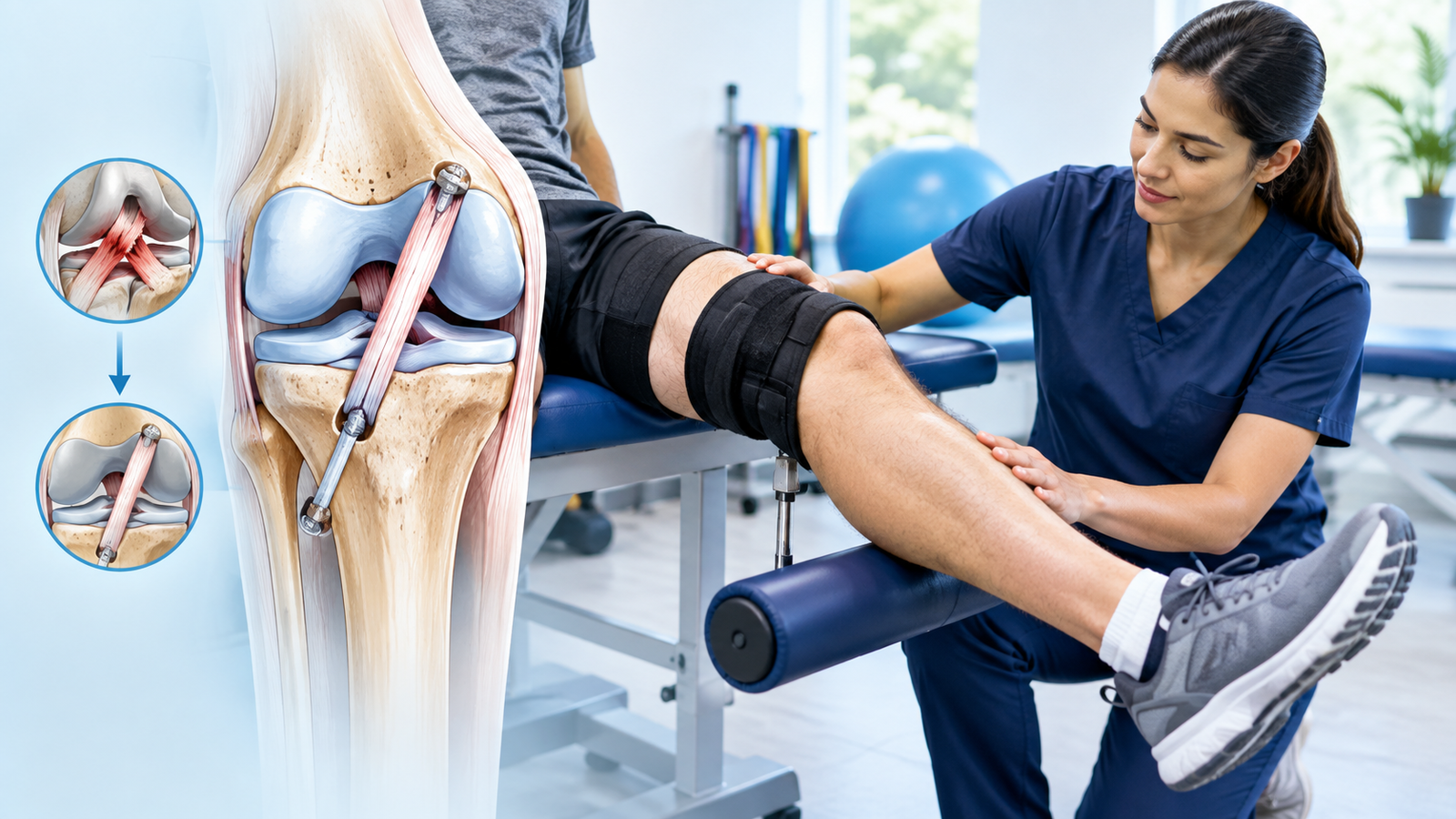


When people hear the word physiotherapist, they often think of someone who gives exercises for back pain, knee pain or sports injuries. While exercise is an important part of physiotherapy, the profession involves much more than simply teaching exercises.
A physiotherapist is a healthcare professional who evaluates movement, pain, muscle strength, joint mobility, balance, coordination and physical function and then develops an individualized treatment and rehabilitation plan.
Physiotherapy can help people recover after injuries, surgery, neurological conditions and prolonged illness. It can also help individuals manage chronic pain, improve physical performance, maintain independence and prevent future movement problems.
But what exactly does a physiotherapist do during an assessment and treatment session?
Let’s understand the role of a physiotherapist, what happens during physiotherapy, which conditions can benefit from treatment, what techniques may be used and when you should consider seeking professional assessment.
What Is Physiotherapy?
Physiotherapy is a healthcare profession focused on improving movement, physical function and quality of life.
Rather than treating only a painful body part, physiotherapy aims to understand why the problem is occurring and how it is affecting movement and daily activities.
Depending on the person’s condition, a physiotherapist may work on:
- Pain management
- Joint mobility
- Muscle strength
- Flexibility
- Balance
- Coordination
- Posture
- Walking ability
- Functional movement
- Cardiovascular endurance
- Sports performance
- Neurological recovery
- Independence in daily activities
Treatment is generally based on a detailed assessment rather than using the same treatment program for every patient.
What Does a Physiotherapist Actually Do?
A physiotherapist performs several important roles throughout a patient’s rehabilitation journey.
The process commonly includes assessment, clinical reasoning, treatment, exercise prescription, education, monitoring and rehabilitation progression.
1. A Physiotherapist Performs a Detailed Assessment
The first step is usually understanding the patient’s problem.
A physiotherapist may ask questions about:
- Where the pain or difficulty is located
- When the problem started
- Whether there was an injury
- Previous medical or surgical history
- Activities that increase or decrease symptoms
- Work and lifestyle demands
- Walking and movement difficulties
- Sleep-related problems
- Previous physiotherapy
- Current functional limitations
The physical examination may then include assessment of:
- Joint range of motion
- Muscle strength
- Muscle flexibility
- Posture
- Balance
- Coordination
- Gait or walking pattern
- Reflexes and neurological function when appropriate
- Functional movement
- Pain behavior
- Joint and soft-tissue mobility
This assessment helps the physiotherapist determine the patient’s movement-related impairments and functional limitations.
2. Physiotherapists Help Manage Pain
Pain is one of the most common reasons people seek physiotherapy.
Physiotherapists may help people manage pain associated with conditions such as:
- Low back pain
- Neck pain
- Knee pain
- Shoulder pain
- Osteoarthritis
- Muscle strains
- Tendinopathies
- Sports injuries
- Post-operative conditions
- Certain neurological conditions
Pain management may involve a combination of education, therapeutic exercise, manual therapy, activity modification and selected physical modalities.
Importantly, the aim is not simply to temporarily reduce pain. A good rehabilitation program also addresses factors that may be contributing to the person’s difficulty with movement and function.
3. Physiotherapists Prescribe Therapeutic Exercises
Exercise therapy is one of the most important components of modern physiotherapy.
The exercises selected depend on the individual’s condition, strength, mobility, goals and stage of recovery.
A physiotherapist may prescribe:
Strengthening exercises
These are used to improve muscle capacity and support functional activities.
Examples include:
- Resistance exercises
- Progressive strengthening
- Isometric exercises
- Functional strengthening
- Core strengthening
Flexibility exercises
These may be used when restricted flexibility contributes to movement limitations.
Examples include:
- Muscle stretching
- Active flexibility exercises
- Mobility exercises
Balance exercises
Balance training can be particularly useful for people with:
- Reduced stability
- Certain neurological conditions
- Age-related balance difficulties
- Previous falls
- Lower-limb weakness
Functional exercises
These replicate movements needed in everyday life.
For example:
- Sit-to-stand practice
- Stair training
- Walking practice
- Reaching activities
- Squatting
- Bed mobility
- Transfer training
The goal is to gradually make movement safer, stronger and more efficient.
4. Physiotherapists Use Manual Therapy When Appropriate
Manual therapy refers to hands-on techniques used to assess or influence movement, joint mobility and soft-tissue function.
Depending on the patient’s condition and clinical findings, techniques may include:
- Joint mobilization
- Soft-tissue techniques
- Muscle relaxation techniques
- Stretching
- Assisted movement
- Mobilization techniques
- Selected neurodynamic techniques
Manual therapy is generally most useful when it is integrated into an overall rehabilitation plan rather than being treated as the only component of treatment.
In many conditions, hands-on treatment may be combined with exercises and education to help patients become more independent.
5. Physiotherapists May Use Electrotherapy and Other Physical Modalities
Certain physiotherapy clinics use physical modalities as part of a broader treatment program.
Depending on the patient’s condition and clinical indication, a physiotherapist may consider modalities such as:
- TENS
- IFT
- Therapeutic ultrasound
- Electrical muscle stimulation
- Heat therapy
- Cryotherapy
- Selected forms of therapeutic light or other physical agents
These modalities are not appropriate for every patient.
A physiotherapist should consider the patient’s diagnosis, symptoms, medical history, contraindications and treatment goals before selecting a modality.
Electrotherapy should complement rehabilitation rather than replace appropriate exercise, education and functional training.
6. Physiotherapists Help Patients After Surgery
Physiotherapy can play an important role before and after many orthopedic and other surgical procedures.
Depending on the procedure, rehabilitation may address:
- Pain and swelling management
- Joint mobility
- Muscle activation
- Strength recovery
- Walking
- Balance
- Functional independence
- Return to normal activities
For example, rehabilitation may be required following:
- Knee surgery
- Hip surgery
- Shoulder surgery
- Fracture fixation
- Ligament reconstruction
- Joint replacement
- Spinal surgery
The rehabilitation program should be adjusted according to the surgical procedure, tissue healing stage and instructions from the treating medical team.
7. Physiotherapists Work With Neurological Conditions
Physiotherapy is not limited to bones, joints and muscles.
Neurological physiotherapy focuses on movement and functional difficulties associated with conditions affecting the nervous system.
A physiotherapist may work with people experiencing:
- Stroke-related weakness
- Balance impairment
- Difficulty walking
- Coordination problems
- Muscle weakness
- Abnormal muscle tone
- Reduced motor control
- Certain spinal cord conditions
- Certain neurological disorders
For example, after a stroke, rehabilitation may focus on:
- Bed mobility
- Sitting balance
- Standing
- Transfers
- Walking
- Upper-limb function
- Lower-limb control
- Balance
- Coordination
- Functional activities
- Independence in activities of daily living
The treatment approach should be individualized according to the person’s neurological presentation and functional goals.
8. Physiotherapists Help Improve Walking and Mobility
Walking difficulties can occur for many different reasons.
A person may have difficulty walking because of:
- Muscle weakness
- Joint stiffness
- Pain
- Balance impairment
- Neurological problems
- Previous injury
- Deconditioning
- Reduced coordination
Physiotherapists can assess walking patterns and identify factors affecting mobility.
Rehabilitation may include:
- Strength training
- Balance exercises
- Gait training
- Coordination exercises
- Transfer training
- Walking practice
- Stair training
- Functional strengthening
When necessary, a physiotherapist may also recommend or train a patient in the appropriate use of mobility aids.
9. Physiotherapists Help With Sports Injuries
Athletes and physically active individuals may require physiotherapy for both injury recovery and performance-related concerns.
Common examples include:
- Ankle sprains
- Muscle strains
- Tendinopathies
- Knee injuries
- Shoulder injuries
- Sports-related back pain
- Overuse injuries
Sports rehabilitation may progress through different stages:
Pain and symptom management → mobility → strength → neuromuscular control → functional training → sport-specific rehabilitation → return to activity
Returning to sport simply because pain has decreased may not always mean the body is ready for full sporting demands.
A physiotherapist can help assess readiness for progressively higher levels of activity.
10. Physiotherapists Educate Patients
One of the most important things a physiotherapist does is educate the patient.
Patients may receive guidance about:
- Correct exercise technique
- Posture and movement habits
- Activity modification
- Safe lifting
- Workstation setup
- Home exercises
- Recovery strategies
- Use of mobility aids
- Injury prevention
- Gradual return to activity
Understanding your condition can make rehabilitation more effective because the patient becomes an active participant rather than simply receiving treatment.
What Happens During a Physiotherapy Session?
A typical physiotherapy session may vary depending on the condition and treatment stage.
A session may include:
Step 1: Review
The physiotherapist checks how the patient has been doing since the previous session.
Step 2: Reassessment
Important symptoms, movement restrictions or functional problems may be reassessed.
Step 3: Treatment
Treatment may include exercise, manual therapy, functional training or an appropriate physical modality.
Step 4: Progression
Exercises may be made easier or more challenging depending on the patient’s response.
Step 5: Home Program
The patient may receive specific exercises or advice to continue rehabilitation between sessions.
Not every patient needs the same treatment in every session.
What Conditions Can Physiotherapists Treat?
Physiotherapy can be useful across many areas of healthcare.
Musculoskeletal Conditions
Examples include:
- Low back pain
- Neck pain
- Shoulder pain
- Frozen shoulder
- Knee osteoarthritis
- Tennis elbow
- Ankle injuries
- Muscle strains
- Joint stiffness
- Tendinopathies
- Sports injuries
Neurological Rehabilitation
Examples include:
- Stroke rehabilitation
- Movement and balance difficulties
- Neurological weakness
- Gait impairment
- Coordination problems
- Certain spinal cord conditions
Orthopedic Rehabilitation
Physiotherapists may assist with rehabilitation following:
- Fractures
- Joint replacement
- Ligament injuries
- Orthopedic surgery
- Dislocations
- Soft-tissue injuries
Geriatric Rehabilitation
Older adults may benefit from physiotherapy for:
- Balance problems
- Reduced strength
- Mobility limitations
- Falls-risk reduction
- Functional decline
- Post-operative rehabilitation
Pediatric Physiotherapy
Depending on training and clinical setting, physiotherapists may also work with children who have difficulties involving:
- Gross motor development
- Balance
- Strength
- Coordination
- Mobility
- Functional movement
Is Physiotherapy Only for People With Pain?
No.
Pain is only one reason people visit a physiotherapist.
Physiotherapy can also be appropriate when someone has:
- Weakness
- Stiffness
- Reduced balance
- Difficulty walking
- Reduced endurance
- Poor coordination
- Reduced mobility
- Difficulty performing daily activities
- Reduced physical capacity after illness or hospitalization
Some people may also seek physiotherapy to improve physical performance or reduce the risk of recurring problems.
When Should You See a Physiotherapist?
Consider seeking professional assessment if a physical problem is affecting your normal activities or is not improving as expected.
Examples include:
- Persistent back or neck pain
- Recurrent joint pain
- Difficulty walking
- Reduced shoulder movement
- Knee pain while climbing stairs
- Muscle weakness
- Balance problems
- Recovery after surgery or injury
- Difficulty returning to sport
- Movement problems following a neurological event
A physiotherapist can assess whether physiotherapy is appropriate or whether further medical evaluation is required.
Can Physiotherapy Be Done Without Exercise?
Some treatment sessions may include hands-on therapy or physical modalities, particularly when clinically appropriate.
However, exercise and functional rehabilitation are often central components of physiotherapy.
The exact program depends on the diagnosis, impairments, stage of recovery and individual goals.
A physiotherapist should not simply provide a generic list of exercises. Exercises should be selected and progressed according to the patient’s assessment.
How Long Does Physiotherapy Take to Work?
There is no universal number of sessions that works for everyone.
Recovery depends on factors such as:
- Type and severity of the condition
- Duration of the problem
- Age
- General physical condition
- Strength and mobility
- Neurological involvement
- Previous injuries
- Surgical history
- Adherence to the rehabilitation program
- Lifestyle and activity demands
Some minor problems may improve relatively quickly, while neurological, post-operative or long-standing conditions may require a longer rehabilitation process.
A responsible physiotherapist should avoid promising a guaranteed cure or a fixed recovery time without proper assessment.
What Should You Do Before Your First Physiotherapy Appointment?
To make the assessment more useful, bring or remember relevant information such as:
- Previous medical reports
- Imaging reports when available
- Surgical records
- Current medications
- Previous treatment details
- Details of when symptoms started
- Information about activities that aggravate symptoms
Wear comfortable clothing that allows the affected body region to be assessed and movement to be observed.
Precautions During Physiotherapy
Physiotherapy is generally designed to be safe when appropriately prescribed, but treatment must be individualized.
Tell your physiotherapist about relevant medical conditions, recent surgery, medications, implanted devices, pregnancy when applicable, or any significant change in symptoms.
You should also report unusual or worsening symptoms during treatment.
Seek urgent medical attention rather than relying on routine physiotherapy when symptoms suggest a medical emergency.
Examples can include:
- Sudden severe chest pain
- Severe breathing difficulty
- Sudden loss of consciousness
- Sudden new facial or limb weakness
- New severe neurological symptoms
- Major trauma with suspected serious injury
- Other rapidly worsening or potentially life-threatening symptoms
Physiotherapy should complement appropriate medical care, not delay emergency evaluation.
Physiotherapy Home Advice: What Can Patients Do?
Your home routine is an important part of rehabilitation.
General principles include:
- Follow the exercise program prescribed by your physiotherapist.
- Perform exercises using the recommended technique.
- Do not suddenly increase exercise intensity.
- Maintain appropriate daily activity unless advised otherwise.
- Take adequate rest between demanding activities.
- Avoid repeatedly performing movements that significantly aggravate symptoms.
- Keep follow-up appointments when reassessment is needed.
- Inform your physiotherapist if symptoms change significantly.
Most importantly, do not copy another person’s rehabilitation program simply because they have a similar diagnosis. Two people with the same diagnosis may have very different impairments and rehabilitation needs.
Physiotherapy Is More Than Machines and Exercises
One of the biggest misconceptions about physiotherapy is that treatment means using a machine or performing a few exercises.
In reality, physiotherapy involves clinical assessment and decision-making.
A physiotherapist considers:
What is the patient’s problem?
What is causing or contributing to the movement limitation?
What functions are affected?
What can safely be improved?
Which interventions are appropriate?
How should rehabilitation progress?
This makes physiotherapy a structured healthcare intervention rather than simply a collection of exercises or modalities.
The Goal of Physiotherapy: Better Movement and Better Function
Ultimately, physiotherapy is about helping people move and function as safely and effectively as possible.
The goal may be different for each person.
For one patient, success may mean walking independently.
For another, it may mean returning to work.
For an older adult, it may mean getting up from a chair and climbing stairs more safely.
For an athlete, it may mean returning to sport.
For someone recovering from stroke, it may mean improving transfers, balance, walking or upper-limb function.
The best rehabilitation program is therefore the one that is connected to the patient’s real-life goals.
Physiotherapy & Rehabilitation in Nalbari and Rangia, Assam
If pain, weakness, stiffness, balance problems, difficulty walking or an injury is affecting your daily life, a professional physiotherapy assessment can help determine the underlying movement and functional problems and whether rehabilitation is appropriate.
Patients from Nalbari, Rangia, Dhamdhama, Dimu and nearby areas of Assam can seek physiotherapy assessment and rehabilitation services at:
1. Dr. Jehu’s KinetiQure Physiotherapy & Rehabilitation Center
Address: Khatikuchi, Nalbari, Assam – 781369
The center provides physiotherapy and rehabilitation focused on individualized assessment, movement recovery, pain management, strengthening, mobility and functional rehabilitation.
2. RevitaFlex PhysioCare – Dhamdhama Branch
Address: Dhamdhama–Santipur Road, Near Dhamdhama Bus Stand, Dhamdhama, Nalbari, Assam – 781349
Patients from Dhamdhama and surrounding areas can seek professional assessment for musculoskeletal, orthopedic, neurological and rehabilitation-related concerns.
3. RevitaFlex PhysioCare – Dimu Branch
Address: Dimu–Dobok Chariali, Dimu–Baharghat Road, Dimu, Rangia, Assam – 781380
This branch provides access to physiotherapy and rehabilitation services for patients in Dimu, Rangia and nearby areas.
Home Physiotherapy Visit
For patients who have difficulty travelling to a clinic because of mobility limitations, post-operative recovery, neurological impairment or other functional difficulties, home physiotherapy assessment and rehabilitation visits may also be considered.
Dr. Jehirul Islam (PT), Consultant Physio
Contact/WhatsApp: +91 7086225195
Email: draaryanphysio@gmail.com
Before beginning treatment, a proper assessment is important to understand the patient’s condition, functional limitations and rehabilitation goals.
Frequently Asked Questions About Physiotherapy
1. What exactly does a physiotherapist do?
A physiotherapist assesses movement, pain, muscle strength, joint mobility, balance and physical function. Based on the assessment, they may provide therapeutic exercise, manual therapy, functional training, education and selected physical modalities to help improve movement and function.
2. Can a physiotherapist treat back pain?
Yes. Physiotherapists commonly manage many types of musculoskeletal back pain. Treatment may include education, therapeutic exercise, mobility work, strengthening, manual therapy and activity modification depending on the individual’s assessment.
3. Do physiotherapists only treat injuries?
No. Physiotherapy can also help with neurological rehabilitation, post-operative recovery, balance problems, weakness, mobility limitations, chronic musculoskeletal conditions and functional difficulties.
4. Do I need a doctor’s referral to see a physiotherapist?
Requirements can vary depending on the healthcare setting and applicable local regulations. In many situations, patients can seek physiotherapy assessment directly, while certain conditions may require medical evaluation or referral.
5. Is physiotherapy painful?
Physiotherapy should be appropriately tailored to the patient’s condition. Some exercises or manual techniques may produce temporary discomfort, but severe or unexpected pain should be communicated to the physiotherapist so the treatment can be reassessed.
6. How many physiotherapy sessions will I need?
There is no fixed number of sessions for every condition. Treatment duration depends on the diagnosis, severity, duration of symptoms, functional limitations, response to treatment and adherence to rehabilitation.
7. Can physiotherapy help after a stroke?
Yes. Neurological physiotherapy can help address problems such as weakness, impaired balance, walking difficulty, reduced coordination and functional limitations after stroke. Rehabilitation goals and techniques depend on the individual’s neurological presentation.
8. Can physiotherapy help with muscle weakness?
Yes. Depending on the underlying cause, physiotherapy may use progressive strengthening, functional training, neuromuscular re-education, mobility exercises and other appropriate interventions to improve physical function.
9. Is physiotherapy useful after surgery?
Physiotherapy is commonly incorporated into rehabilitation following many orthopedic and other surgical procedures. The program may focus on mobility, strength, pain management, walking and gradual return to functional activities.
10. Can I do physiotherapy exercises at home?
Yes, many rehabilitation exercises can be performed at home after they have been appropriately prescribed and demonstrated by a physiotherapist. The exercises should be individualized and progressed according to the patient’s condition.
Final Takeaway
So, what exactly does a physiotherapist do?
A physiotherapist does much more than provide exercises or operate treatment machines.
They assess movement, identify functional problems, manage appropriate physical impairments, prescribe individualized rehabilitation, educate patients and monitor progress.
Whether the problem involves pain, weakness, stiffness, balance, walking, sports performance, post-operative recovery or neurological rehabilitation, physiotherapy aims to help the individual achieve meaningful improvements in movement and everyday function.
If a physical problem is interfering with your work, exercise, walking, sleep or daily activities, a professional physiotherapy assessment can be an important first step toward understanding the problem and developing an appropriate rehabilitation plan.
 Next Post