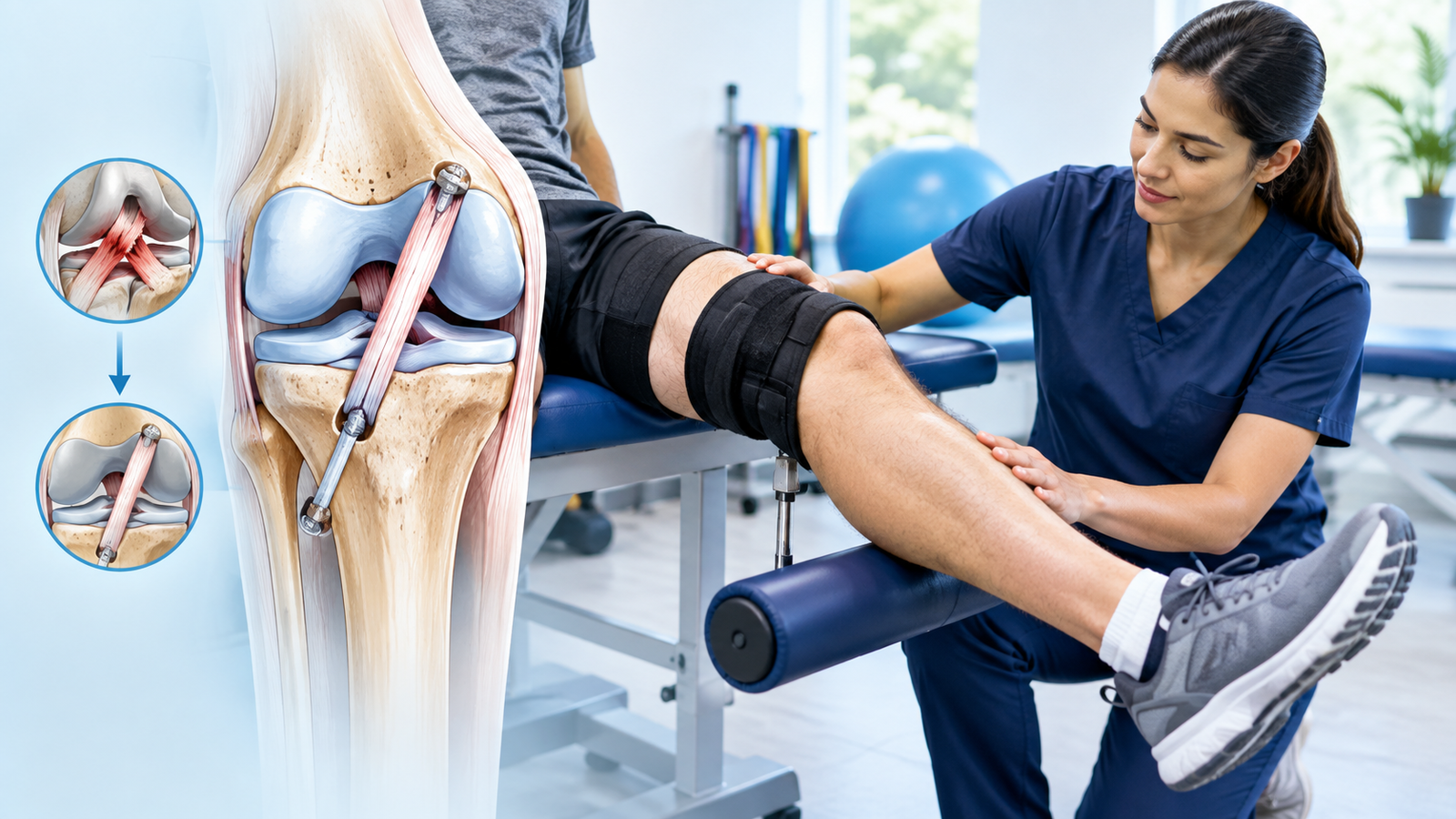


Physiotherapy and physiotherapy exercises are closely connected, but they are not the same. Learn why professional assessment matters, how physiotherapists select and progress exercises, and when personalized rehabilitation may be more appropriate than generic exercise routines. This guide explains the key differences, benefits, precautions and practical advice for safer, goal-focused physiotherapy.
Many people use the words “physiotherapy” and “physiotherapy exercises” as if they mean exactly the same thing. They are closely related, but they are not identical.
Physiotherapy is a broader healthcare profession involving assessment, clinical reasoning, treatment planning, rehabilitation and prevention. Exercise therapy is one important component of physiotherapy—but it is only one part of the complete process.
For example, two people may have knee pain, but the appropriate exercise program may be completely different depending on the cause of pain, muscle strength, joint mobility, movement pattern, age, activity level and other clinical findings.
This is why simply searching for exercises online and performing them without assessment may not always address the actual problem.
Understanding the difference between physiotherapy and physiotherapy exercises can help patients make safer and more informed decisions about their rehabilitation.
What Is Physiotherapy?
Physiotherapy, also called physical therapy in some countries, is a healthcare profession focused on helping people improve movement, physical function and quality of life.
A physiotherapist assesses the patient and develops an individualized management plan based on the person’s condition and functional goals.
Physiotherapy may be used for problems involving:
- Muscles
- Joints
- Bones
- Nerves
- The spine
- Balance
- Movement
- Sports injuries
- Neurological conditions
- Post-operative rehabilitation
- Age-related mobility problems
The treatment approach depends on the patient’s diagnosis, symptoms, physical findings and rehabilitation goals.
What Are Physiotherapy Exercises?
Physiotherapy exercises are planned physical movements prescribed or taught to address specific impairments or functional limitations.
They may be used to:
- Improve muscle strength
- Increase flexibility
- Maintain joint mobility
- Improve balance
- Improve coordination
- Develop endurance
- Improve posture and movement control
- Retrain walking
- Improve functional independence
Exercises may include strengthening, stretching, mobility exercises, balance training, aerobic conditioning, coordination activities and task-specific exercises.
However, an exercise is not automatically appropriate simply because it is commonly recommended for a particular condition.
Physiotherapy vs Physiotherapy Exercises: The Key Difference
The simplest way to understand the difference is:
Physiotherapy is the complete clinical rehabilitation process, while physiotherapy exercises are one of the tools used within that process.
A physiotherapy session may involve:
- Patient history
- Physical assessment
- Clinical reasoning
- Identification of movement or functional problems
- Treatment planning
- Exercise therapy
- Manual therapy when appropriate
- Education
- Functional rehabilitation
- Progress monitoring
- Modification of the treatment plan
Exercise therapy may therefore be part of physiotherapy, but physiotherapy is much broader than exercise alone.
Why Is Assessment Important Before Exercise?
One of the most important differences between professional physiotherapy and simply exercising at home is individual assessment.
Two patients can have similar symptoms but completely different underlying problems.
For example, two people may report shoulder pain.
One person may have:
- Reduced shoulder mobility
- Joint stiffness
- Muscle weakness
Another may have:
- Pain with specific movements
- Tendon-related problems
- Poor movement control
Their exercise programs may need to be different.
A physiotherapist can assess movement, strength, mobility, pain behavior and functional limitations before selecting appropriate exercises.
Exercise Is Not “One Size Fits All”
A common misconception is that there is one ideal exercise for every condition.
In reality, exercise selection depends on several factors.
Important considerations include:
- Diagnosis or suspected diagnosis
- Severity of symptoms
- Stage of recovery
- Age
- Muscle strength
- Joint mobility
- Pain response
- Balance
- Neurological status
- Previous injuries
- Surgical history
- Functional requirements
- Individual goals
An exercise that is useful for one person may be inappropriate or unnecessarily difficult for another.
What Does a Physiotherapist Do Beyond Exercise?
Physiotherapy involves much more than giving patients a list of exercises.
1. Clinical Assessment
The physiotherapist may evaluate:
- Pain
- Range of motion
- Muscle strength
- Joint movement
- Muscle tone
- Posture
- Balance
- Coordination
- Walking pattern
- Functional movement
- Neurological signs
The assessment helps establish a baseline and identify problems that need attention.
2. Exercise Prescription
Exercises are selected according to the individual’s needs.
For example, a patient may require:
- Mobility exercises
- Strengthening
- Stretching
- Balance training
- Core exercises
- Gait training
- Coordination exercises
- Functional task practice
The physiotherapist can also determine appropriate repetitions, resistance, frequency and progression.
3. Manual Therapy
When clinically appropriate, physiotherapists may use hands-on techniques to help address certain musculoskeletal problems.
Depending on the condition, these may include:
- Joint mobilization
- Soft-tissue techniques
- Muscle stretching
- Movement-based manual techniques
Manual therapy is generally used as part of a broader rehabilitation program rather than as a replacement for active rehabilitation.
4. Education
Patient education is an important part of physiotherapy.
A physiotherapist may explain:
- What may be contributing to the symptoms
- Which activities should temporarily be modified
- How to perform exercises safely
- How to gradually return to normal activity
- How to manage workload
- How to reduce unnecessary fear around movement
Understanding the condition can help patients participate more effectively in their rehabilitation.
5. Functional Rehabilitation
The ultimate goal of rehabilitation is often not simply to improve an isolated muscle or joint.
It may be to help a person:
- Walk independently
- Climb stairs
- Return to work
- Resume sports
- Lift objects safely
- Perform household activities
- Return to hobbies
- Improve independence after neurological injury
Therefore, physiotherapy often progresses from individual exercises toward meaningful functional activities.
Examples: Physiotherapy vs Exercises for Common Conditions
Low Back Pain
A patient with low back pain may benefit from:
- Movement assessment
- Education
- Activity modification
- Mobility exercises
- Strengthening
- Trunk control training
- Functional rehabilitation
But the specific program depends on the person’s symptoms and clinical presentation.
Doing random “back pain exercises” may not address the relevant contributing factors.
Knee Osteoarthritis
Physiotherapy may include:
- Knee assessment
- Quadriceps strengthening
- Hip strengthening
- Mobility exercises
- Balance training
- Functional training
- Activity advice
- Weight-management education where appropriate
- Walking and stair strategies
Exercise therapy is important, but the complete management plan can involve much more.
Frozen Shoulder
A physiotherapist may assess:
- Shoulder range of motion
- Pain behavior
- Functional limitations
- Joint stiffness
- Movement patterns
Treatment may include appropriate mobility exercises, strengthening during the appropriate stage, education and selected manual techniques.
Aggressive stretching is not automatically appropriate for every stage or every patient.
Stroke Rehabilitation
Stroke rehabilitation is another clear example of why physiotherapy is more than exercise.
A patient may require:
- Neurological assessment
- Positioning
- Bed mobility training
- Sitting balance
- Standing training
- Transfer practice
- Gait rehabilitation
- Upper-limb functional training
- Coordination exercises
- Task-specific practice
- Caregiver education
Simply giving a stroke survivor a few strengthening exercises may not address their complete rehabilitation needs.
Why “Exercise Videos” Cannot Replace Individual Physiotherapy
Online exercise videos can be useful for general education, but they have limitations.
A video cannot reliably determine:
- Why you have pain
- Whether your movement is safe
- Whether you have a neurological problem
- Whether your exercise technique is appropriate
- Whether your symptoms indicate another condition
- How much resistance you should use
- When the exercise should be progressed or stopped
Professional assessment becomes especially important when symptoms are severe, persistent, recurrent or associated with neurological changes.
Can Physiotherapy Be Done Without Exercises?
Yes, depending on the situation.
Not every physiotherapy session needs to contain the same amount or type of exercise.
For example, an early-stage rehabilitation session may focus more on:
- Education
- Positioning
- Gentle mobility
- Functional assessment
- Pain management
- Safe movement strategies
However, active rehabilitation and appropriate physical activity are often important components of long-term recovery.
The treatment plan should change as the patient’s condition changes.
Can I Do Physiotherapy Exercises at Home?
Yes. Home exercise programs are an important part of many physiotherapy treatment plans.
A physiotherapist may provide exercises for patients to perform between appointments.
A good home program should be:
- Specific
- Understandable
- Safe
- Appropriate for the person’s condition
- Progressive when appropriate
- Compatible with the patient’s daily routine
The purpose is not simply to give the patient more exercises. It is to provide the right exercises at the right stage of rehabilitation.
How Physiotherapy Exercises Should Progress
Rehabilitation should generally evolve as the patient improves.
For example:
Pain control and mobility → muscle activation → strengthening → functional training → higher-level activity
The exact sequence differs between conditions.
Progression may involve changes in:
- Resistance
- Repetitions
- Duration
- Movement complexity
- Speed
- Balance challenge
- Functional demands
Doing the same exercise at the same intensity indefinitely may not provide an appropriate rehabilitation stimulus.
Signs That an Exercise Program May Need Review
Consider speaking with a physiotherapist if:
- Pain consistently increases after exercise
- Symptoms continue to worsen
- You cannot perform an exercise correctly
- You are unsure whether an exercise is appropriate
- Your strength is not improving as expected
- Your movement becomes increasingly restricted
- You develop numbness or tingling
- You experience new weakness
- Balance deteriorates
- You have difficulty performing everyday activities
These signs do not necessarily mean exercise is harmful, but they may indicate that the program needs reassessment.
Home Advice for Safe Physiotherapy Exercises
If you have been given a physiotherapy exercise program:
1. Follow the prescribed dosage
Do not automatically assume that more repetitions produce faster recovery.
2. Focus on technique
Quality of movement is often more important than simply completing a large number of repetitions.
3. Progress gradually
Increase resistance, repetitions or difficulty according to your rehabilitation plan.
4. Avoid comparing yourself with others
Recovery speed varies significantly between individuals.
5. Monitor your symptoms
Pay attention to how your body responds during and after exercise.
6. Ask when uncertain
If an exercise causes unusual or concerning symptoms, seek professional guidance rather than guessing.
When Should You Seek Professional Physiotherapy Assessment?
Professional assessment is particularly useful when symptoms:
- Persist for several weeks
- Repeatedly return
- Limit daily activities
- Affect walking or balance
- Cause significant weakness
- Follow surgery or trauma
- Are associated with neurological symptoms
- Prevent participation in work or sports
Urgent medical assessment may be necessary for sudden severe symptoms, rapidly progressive weakness, major trauma, loss of bladder or bowel control, or other serious warning signs.
What to Expect During a Physiotherapy Consultation
A typical consultation may include:
Step 1: History
The physiotherapist asks about:
- Main complaint
- Onset
- Previous injuries
- Pain characteristics
- Functional difficulties
- Medical history
- Activity level
Step 2: Physical Examination
Depending on the condition, the physiotherapist may assess:
- Strength
- Range of motion
- Balance
- Posture
- Movement
- Joint function
- Neurological signs
Step 3: Clinical Reasoning
The findings are considered together to determine the most appropriate rehabilitation approach.
Step 4: Treatment Plan
The plan may include:
- Exercise therapy
- Manual therapy where appropriate
- Functional rehabilitation
- Education
- Home exercises
- Activity modification
Step 5: Reassessment
Progress should be monitored and the program modified when necessary.
Physiotherapy Is a Process, Not Just a Set of Exercises
One of the most important concepts for patients to understand is that rehabilitation is a process.
A physiotherapist does not simply prescribe exercises and expect the patient to repeat them indefinitely.
Instead, rehabilitation involves:
Assess → Plan → Treat → Exercise → Monitor → Progress → Reassess
This process helps ensure that treatment remains relevant to the patient’s changing condition.
Final Takeaway
Physiotherapy and physiotherapy exercises are not the same thing.
Physiotherapy is the broader healthcare process involving assessment, clinical reasoning, individualized treatment, exercise prescription, education, functional rehabilitation and progress monitoring.
Exercises are one of the most important tools within physiotherapy, but their effectiveness depends on selecting the appropriate exercises, dosage, technique and progression for the individual.
Whether you are dealing with back pain, knee problems, shoulder stiffness, sports injuries, neurological conditions or post-operative limitations, a personalized assessment can help determine what type of rehabilitation is appropriate for you.
The goal should not simply be to “do more exercises.” The goal is to perform the right rehabilitation activities for the right problem, at the right stage, with appropriate progression.
Frequently Asked Questions
1. What is the difference between physiotherapy and physiotherapy exercises?
Physiotherapy is a complete rehabilitation process that can include assessment, diagnosis-related clinical reasoning, exercise therapy, education, functional training and other appropriate treatment techniques. Physiotherapy exercises are specific movements prescribed as one component of that overall rehabilitation process.
2. Are physiotherapy exercises the same as physiotherapy treatment?
No. Physiotherapy exercises are one part of physiotherapy treatment. A physiotherapy program may also include physical assessment, movement education, manual techniques when appropriate, functional training, gait rehabilitation and ongoing progress assessment.
3. Can I do physiotherapy exercises without seeing a physiotherapist?
Some general exercises may be appropriate for healthy individuals, but exercises should ideally be selected according to the person’s condition and goals. If you have persistent pain, weakness, injury, balance problems, neurological symptoms or a recent surgery, professional assessment is advisable before starting an exercise program.
4. Why is physiotherapy assessment important before exercise?
Assessment helps a physiotherapist understand factors such as strength, mobility, movement patterns, balance, pain and functional limitations. This allows the exercise program to be selected and progressed according to the individual’s needs rather than relying on a generic exercise routine.
5. Can physiotherapy help with back pain, knee pain and shoulder problems?
Physiotherapy can be used to manage many musculoskeletal conditions, including certain types of back pain, knee problems and shoulder disorders. Treatment depends on the individual’s symptoms, clinical findings, diagnosis and functional goals.
6. How often should I do physiotherapy exercises?
The appropriate frequency depends on the exercise, condition, stage of rehabilitation and individual response. A physiotherapist can recommend the appropriate frequency, repetitions, resistance and progression for a particular patient.
7. Can physiotherapy exercises make pain worse?
Some exercises can temporarily produce muscle soreness or mild symptom changes, but persistent or significant worsening should not be ignored. If an exercise consistently increases symptoms or produces new weakness, numbness, dizziness or other concerning changes, the exercise program should be reviewed by a qualified healthcare professional.
8. Is physiotherapy useful after surgery?
Physiotherapy is commonly incorporated into rehabilitation following various surgeries. The program depends on the type of surgery, healing stage, medical instructions and individual functional goals. Post-operative exercises should follow the precautions and recommendations provided by the treating medical team.
9. Can I get physiotherapy in Nalbari or Rangia, Assam?
Yes. Patients from Nalbari, Rangia and nearby areas can seek professional physiotherapy assessment and rehabilitation at suitable local physiotherapy centers. Home physiotherapy may also be considered for patients who have difficulty travelling because of mobility limitations.
10. Should I choose physiotherapy or just do exercises at home?
It depends on your condition. For a minor, uncomplicated issue, general physical activity may sometimes be sufficient. However, persistent pain, recurrent injury, significant weakness, neurological symptoms, post-operative limitations or difficulty with everyday activities may require professional assessment and an individualized physiotherapy program.
Physiotherapy & Rehabilitation in Nalbari and Rangia, Assam
For people searching for physiotherapy in Nalbari, physiotherapy in Rangia, or professional rehabilitation near Nalbari and Rangia, understanding the difference between general exercises and individualized physiotherapy is especially important.
A professional assessment can help identify the underlying movement or functional problem and develop a rehabilitation program appropriate to the patient’s condition.
Patients from Nalbari, Rangia and nearby areas can visit:
1. Dr. Jehu’s KinetiQure Physiotherapy & Rehabilitation Center
Khatikuchi, Nalbari, Assam – 781369
Patients can seek individualized physiotherapy assessment and rehabilitation for musculoskeletal, neurological, sports and functional movement problems.
2. RevitaFlex PhysioCare – Dhamdhama Branch
Dhamdhama–Santipur Road, Near Dhamdhama Bus Stand, Dhamdhama, Nalbari, Assam – 781349
This branch can be considered by patients from Dhamdhama and surrounding areas who require professional physiotherapy assessment and rehabilitation.
3. RevitaFlex PhysioCare – Dimu Branch
Dimu–Dobok Chariali, Dimu–Baharghat Road, Dimu, Rangia, Assam – 781380
Patients from Rangia, Dimu and nearby areas can seek assessment and individualized physiotherapy care according to their functional needs.
Home Physiotherapy Visit
For patients who have difficulty travelling because of pain, weakness, reduced mobility or functional limitations, home physiotherapy visits may provide an alternative for appropriate cases.
Dr. Jehirul Islam (PT), Consultant Physio
Contact/WhatsApp: +91 7086225195
Email: draaryanphysio@gmail.com
Patients can seek professional assessment to understand whether they require supervised physiotherapy, a structured home exercise program, or a combination of both.
Clinical Disclaimer
The information provided in this article is intended for general educational and informational purposes only. It should not be considered a substitute for professional medical diagnosis, treatment, physiotherapy assessment, or individualized healthcare advice. Exercise requirements vary according to a person’s diagnosis, symptoms, physical condition, medical history and rehabilitation goals. Do not start, modify, or discontinue an exercise or treatment program solely on the basis of information presented in this article. If you experience severe, persistent, rapidly worsening, or unusual symptoms, seek appropriate medical evaluation. Always consult a qualified healthcare professional or physiotherapist for personalized assessment and rehabilitation.
 Previous Post